Our Rooted Mess

  • Discounts
  • Amazon Storefront
  • About the Our Rooted Mess Founders
  • Follow us on Tiktok
  • Follow us on Facebook
  • Follow us on Instagram
  • Subcribe to us on YouTube
  • Follow us on Twitter
  • All Posts
  • Recipe Dashboard
menu icon
go to homepage
  • Discounts
  • Amazon Storefront
  • About the Our Rooted Mess Founders
  • Follow us on Tiktok
  • Follow us on Facebook
  • Follow us on Instagram
  • Subcribe to us on YouTube
  • Follow us on Twitter
  • All Posts
  • Recipe Dashboard

search icon
Homepage link
  • Discounts
  • Amazon Storefront
  • About the Our Rooted Mess Founders
  • Follow us on Tiktok
  • Follow us on Facebook
  • Follow us on Instagram
  • Subcribe to us on YouTube
  • Follow us on Twitter
  • All Posts
  • Recipe Dashboard

×
Home

Fresh-Milled Flour Oatmeal Scotchies with Fresh-Flaked Oats

March 3, 2026 by Erika Leave a Comment

Golden, chewy, and loaded with cozy flavor – these Oatmeal Scotchies are everything you love about a classic oatmeal cookie with a rich butterscotch twist.

Hearty fresh-flaked oat groats and fresh-milled flour give them that perfectly satisfying texture, while melty butterscotch chips add warm, caramel-like sweetness in every bite. The edges bake up slightly crisp with a soft,chewy center that stays tender and delicious.

Comforting, nostalgic, and just the right amount of indulgent – these are the kind of cookies that disappear fast and make the whole kitchen smell like home.
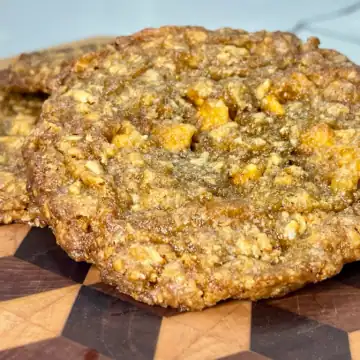
Oatmeal Scotchie Cookies

Fresh-Milled Flour Oatmeal Scotchies with Fresh-Flaked Oats

Erika
Golden, chewy, and loaded with heavenly goodness – these Oatmeal Scotchies are everything you love about a classic cookie with a rich butterscotch twist.
Print Recipe Pin Recipe
Course Dessert

Equipment

  • 1 Mixer
  • 1 Spatula
  • 1 Cookie Sheet
  • 1 Parchment paper
  • 1 Cookie Scoop (I used a 3 tablespoon size scoop)

Ingredients
  

  • 2 sticks Unsalted butter (1 c)
  • ¾ c Sugar
  • ¾ c Brown Sugar
  • 2 Eggs
  • 1 teaspoon Vanilla
  • ½ teaspoon Salt
  • ½ teaspoon Cinnamon
  • 1 teaspoon Baking Soda
  • 194 g Soft White Wheat Berries (or 1 ¼ c all purpose flour)
  • 269 g Flaked Oat Groats (or 3 c Oats)
  • 1 12 oz package of butterscotch chips

Instructions
 

MILL/FLAKE:

  • Mill your soft white wheat berries into a fine flour and set aside.
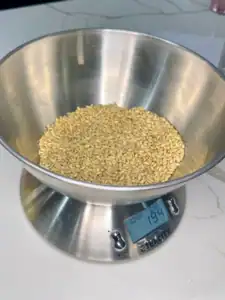
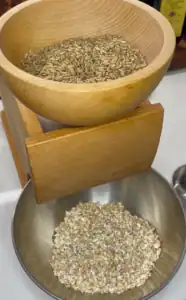
    weighing soft white wheat berries
  • Flake your oat groats and set aside.
    fresh-flaked oat groats

MIX COOKIE DOUGH:

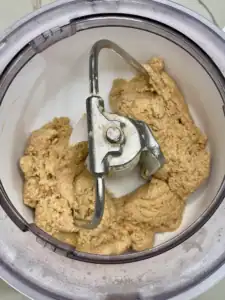
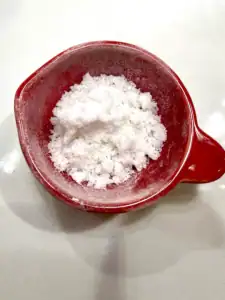
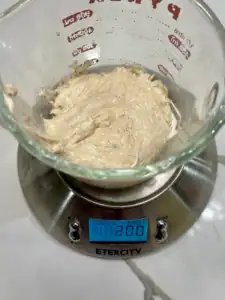
  • Cream together the butter and sugars in the mixer.
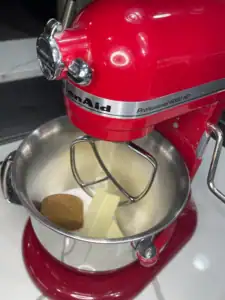
    Butter, Sugar, and brown sugar
  • Add 2 eggs and vanilla to the mixer and mix until the light and fluffy.
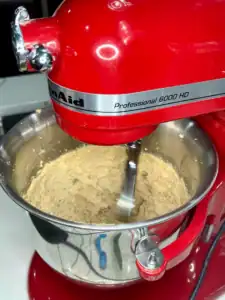
    Creaming sugars with butter
  • Add the salt, cinnamon, and baking soda to your mixer and mix until incorporated.
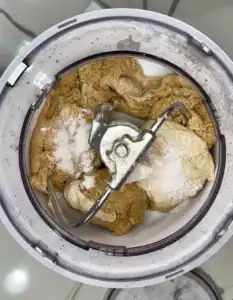
  • Add your fresh-milled flour and fresh-flaked oats to the mixture and stir until combined.
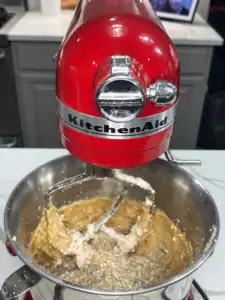
    Adding Flour and Oats
  • Add your butterscotch chips and mix them in by hand with a spatula.

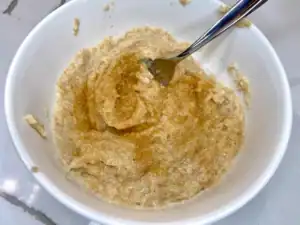
    Oatmeal Scotchie Cookie Dough
  • Scoop the dough into dough balls. If you are going to bake immediately, preheat your oven to 375 degrees Fahrenheit and allow the cookies to sit on the counter for at least 15 minutes. This will allow the fresh-milled flour to absorb liquids. You can also scoop these and freeze them to bake later when you want to be able to have these warm whenever you want them.

    Oatmeal Scotches scooping

BAKE:

  • Bake the cookies on a cookie sheet with parchment paper at 375 degrees Fahrenheit for 10-11 minutes. The cookies will be very soft and gooey when they come out of the oven, but will set up as they cool.
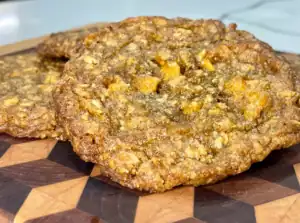
    Oatmeal Scotchie Cookies
Keyword cookie recipes, Fresh-Flaked Oats Recipes, Fresh-Milled Flour Recipes, oatmeal cookie recipes
Tried this recipe?Let us know how it was!
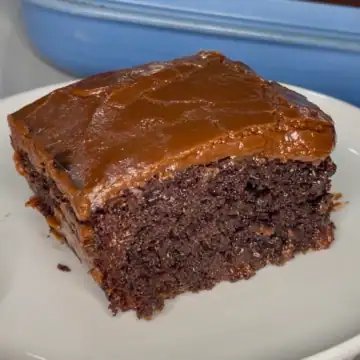
Moist, Fudgy, Divine Chocolate Cherry Cake

February 28, 2026 by Erika Leave a Comment

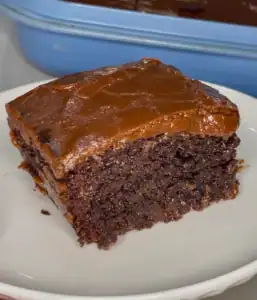
This recipe was originally given to me as a box cake modification, but I’ve taken it to the next level making it from scratch with fresh-milled flour and avocado oil. The smell from the oven was like a sirens call drawing my husband into the kitchen all the way from upstairs.

This recipe produces a moist, divine chocolate cake with a smooth chocolate icing that will be calling for you to eat another slice before you know it.

Moist Chocolate Cherry Cake made with Fresh-Milled Flour

Moist, Fudgy, Divine Chocolate Cherry Cake

Erika
This recipe was originally given to me as a box cake modification, but I've taken it to the next level making it from scratch with fresh-milled flour and avocado oil. The smell from the oven was like a sirens call drawing my husband into the kitchen all the way from upstairs.
Print Recipe Pin Recipe
Course Dessert
Cuisine American

Equipment

  • 1 Flour Mill
  • Batter Bowl
  • 1 Spatula
  • 1 9×13 baking pan

Ingredients
  

Cake:

  • 310 g soft white wheat berries
  • 2 c Sugar (420g)
  • ¾ c Cacao powder (73g or cocoa powder)
  • 2 teaspoon Baking Powder
  • 1 ½ teaspoon Baking Soda
  • 1 teaspoon Salt
  • 1 c Whole Milk
  • ½ c Avocado Oil
  • 2 Eggs
  • 2 teaspoon vanilla extract
  • 1 teaspoon almond extract
  • 1 c Hot Water
  • 1 can Cherry Pie Filling (I used Duncan Hines Simply Cherry)

Icing:

  • 1 c Sugar
  • 5 tablespoon Unsalted butter
  • ⅓ c Whole Milk
  • 1 c Milk Chocolate Chips (I use Azure Standard)

Instructions
 

  • Mill your wheat berries to a fine fresh-milled flour

MAKING THE CAKE BATTER:

  • Mix together the fresh-milled flour, sugar, cacoa powder, baking powder, baking soda, and salt in a bowl.
  • Add in milk, avocado oil, eggs, vanilla extract, almond extract, hot water, and can of cherry pie filling. Stir until combined and no dry flour is present. I usually mix this by hand so you don't overwork it.
  • Grease a 9×13 pan with avocado spray and spread batter evenly into the pan.

BAKING THE CAKE:

  • Preheat the oven to 350 degrees.
  • Let the batter sit on the counter in the pan while the oven preheats or for at least 15 minutes. This allows time for the fresh-milled flour to absorb the liquids.
  • Bake the cake in the center of the oven for 60 minutes. A toothpick will come out fairly clean when inserted into the center of the cake.
    Allow cake to cool

MAKING THE ICING:

  • While the cake is cooling, make your icing.
  • In a medium saucepan, add 1 c. of sugar, 5 tablespoon unsalted butter, ⅓ c. milk, and 1 cup milk chocolate chips and mix together.
  • Bring icing mixture to a rapid boil over .medium high heat stirring constantly. Once at a rapid boil, allow it to continue to boil for 1 minute. After the 1 minute, remove it from the heat.
    Bring icing to a rapid boil and boil for 1 minutes
  • Let the icing cool slightly before pouring onto the cake. If you allow it to cool a little too much, you can return it to the heat to loosen it up so it pours smoothly onto the cake. Make sure to give it a stir before you begin to pour it on your cake. Spread it out evenly over the entire surface of the cake.
    Pouring the icing on the Chocolate Cherry Cake
  • Enjoy this cake warm or cold. It's delicous either way!
    Moist Chocolate Cherry Cake made with Fresh-Milled Flour

Notes

I used volume measurements for everything except my wheat berries, but I did give estimates on the sugar and cacao powder in weight for convenience.  I have not tested this recipe yet using those measurements.
Keyword chocolate cherry cake recipe, devine chocolate cake, fresh-milled flour chocolate cake, heavenly chocolate cake, moist chocolate cake recipe
Tried this recipe?Let us know how it was!
The Best Gooey Sourdough Discard Brownie Recipe

February 17, 2026 by Erika Leave a Comment

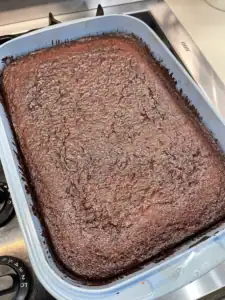
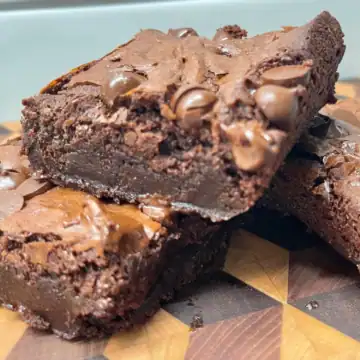
Looking for a sourdough discard recipe that you can use your fresh-milled flour, organic sugar, and avocado oil? Well, here it is! These are a must try. They are soft, gooey, and will satisfy any chocolate craving.

sourdough discard brownies

Sourdough Discard Brownie Recipe

Erika
These brownies are made with sourdough discard, organic sugar, avocado oil, and fresh-milled flour. So they are healthy-ish.
Print Recipe Pin Recipe
Course Dessert
Cuisine American

Equipment

  • 1 Glass bowl
  • 1 whisk
  • 1 Spatula
  • 1 8×8 glass pan

Ingredients
  

  • 70 g unsalted butter
  • 250 g organic cane sugar
  • 2 Large eggs
  • 72 g Avocado Oil
  • 75 g Cacao Powder or cocoa powder
  • 56 g Sourdough discard
  • 40 g Soft White Wheat Berries
  • ⅛ teaspoon baking soda
  • 7 g cornstarch
  • 4 g Kosher Salt
  • 142 g Semi Sweet Chocolate Chips

Instructions
 

PREPARE:

  • Preheat your oven to 325 degrees Fahrenheit.
  • Mill your wheat berries and set them aside.
  • Measure out all of your ingredients if you like or you can measure as you go.
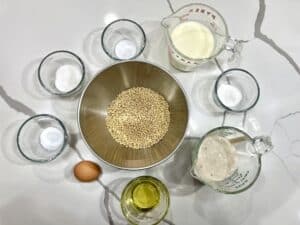
    sourdough brownie recipe ingredients

BUTTER AND SUGAR HEATING:

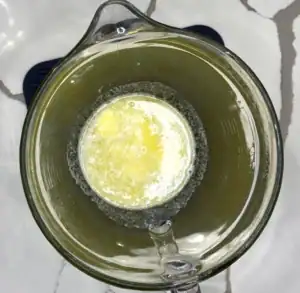
  • Place the butter in a microwave safe bowl big enough to mix all of your ingredients in like a 2 Qt batter bowl.
  • Microwave your butter until it is almost melted (30-60 seconds).
    melted butter
  • Add your organic cane sugar to your butter and use a whisk to combine it.
    Adding sugar for brownie mixture
  • Microwave your sugar and butter mixture for 2 minutes until it is nice and bubbly.
    putting sugar and butter into the microwave
  • Place your bowl on a hot pad and let it cool off slightly.
    sugar and butter after microwaving

ADDING YOUR INGREDIENTS:

  • Add 2 eggs to the sugar and butter mixture and whisk to combine.
    Adding eggs
  • Add your cocoa powder and mix until incorporated.
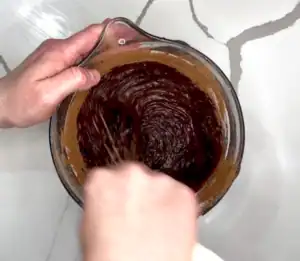
    mixing cacao powder into butter, sugar, and eggs mixture
  • Add your sourdough discard, Soft white fresh-milled flour, baking soda, cornstarch, and kosher salt and using a spatula mix until it is all incorporated.
  • Stir in 110 g of your chocolate chips leaving a handful or approximately 32g for the top.
    Adding chocolate chips to brownies
  • Spray an 8×8 glass pan with avocado oil spray.
    Avocado spray
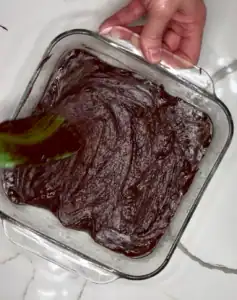
  • Transfer your batter to the pan and spread it out. Add the remaining chocolate chips to the top for garnish.
    spreading brownie mixture in pan

BAKING:

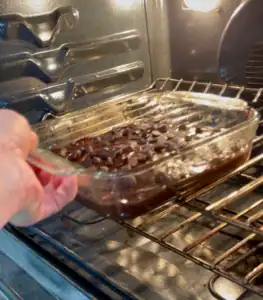
  • Bake the brownies in a 325 degree Fahrenheit oven for 30 minutes. Brownies continue to bake as they cool so be careful not to overbake them. They should be gooey when you take them out of the oven and a toothpick will not come out clean.
    putting brownies in the oven

COOLING:

  • Allow the brownies to cool then slice them and enjoy!
    sourdough discard brownies

Notes

The age of your sourdough discard can affect the tang of these brownies.  If you don’t like the sourdough tang, use more recently discard that is thicker.  If you like the tang, use older thinner discard.
Keyword brownie recipe, brownies, sourdough brownie recipe, sourdough discard brownie recipe
Tried this recipe?Let us know how it was!

Super Soft Tangzhong Sourdough Sandwich Loaf Recipe

February 13, 2026 by Erika Leave a Comment

Are you seeking a super soft sandwich bread recipe that is more similar to white bread, but has all the nutritional power of fresh-milled flour? This recipe is one that I worked on for some time making tweaks to over and over until it was perfection. It has touches of butter and honey which make it rich and slightly sweet. Our youngest daughter doesn’t like wheat bread and loves this sandwich bread! We have incorporated a couple of tricks utilizing the tangzhong method which makes this the recipe you need to try! It makes excellent sandwiches, toast, grilled cheese, or french toast. It’s so much better than store-bought bread!

Sourdough sandwich bread recipe

Soft Tangzhong Sourdough Sandwich Loaf Recipe for Pullman 13 Pan

Erika
After so many revisions, my Pullman Tangzhong Sourdough Sandwich Loaf Recipe is finally here! This recipe produces a very soft almost white bread like sandwich bread, but with all the benefits of fresh-milled flour. Baking it in the Pullman 13 will square off the slices which make perfect toast, sandwiches, or grilled cheese. Even your pickiest eaters will love it! This recipe is for one loaf, but you can double it if you have two Pullman 13 pans.
Print Recipe Pin Recipe
Course Breakfast, Dinner, Lunch

Equipment

  • 1 Grain Mill
  • 1 Bosch mixer
  • 1 6L Cambro
  • 1 Pot or Bowl (for the Tangzhong)
  • 1 Pullman 13 Pan

Ingredients
  

  • 387 g Spring water
  • 483 g Hard white wheat berries
  • 192 g Khorasan wheat berries
  • 20 g Flaxseed meal
  • 175 g Whole Milk
  • 77 g UNSALTED butter cubed
  • 12 g salt
  • 150 g Sourdough starter at peak
  • 38 g Honey

Instructions
 

  • Mill your wheat berries. You can mill them all together or mill 35g of hard wheat separately for the Tangzhong.
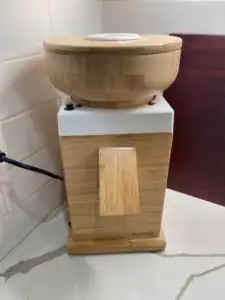
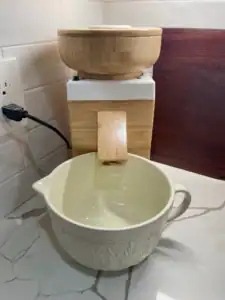
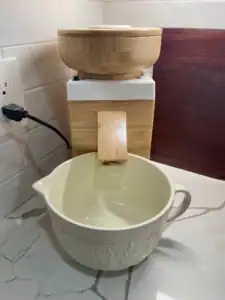
    Stone Flour Mill

MAKE THE TANGZHONG:

  • Put your whole milk in a pot or glass bowl and add 35g of the fresh-milled flour into your milk. (I use hard white if I do it separately rather than pulling from the entire recipe's fresh-milled flour).
  • You can either heat the Tangzhong mixture on the stove stirring constantly or microwave it in 30 second increments stirring in-between. In the microwave, this usually takes 3 rounds of 30 seconds unless you are doubling then it can take longer. Whether you do the Tangzhong in the microwave of the stove, heat it till it is 150 degrees Fahrenheit. Once the mixture reaches 150 degrees Fahrenheit, set it aside and cover it loosely.
    tangzhong cooling

AUTOLYSE:

  • In your mixer, add the water, remaining fresh-milled flour, and the flaxseed meal. Mix until all ingredients are wet and you do not see any dry flour. Cover and let both the Tangzhong and mixer ingredients autolyse for 1 hour. This also gives the Tangzhong time to cool down.
    Pullman 13 Sandwich Loaf ready for 1 hr autolyse

SET REMAINDER OF INGREDIENTS ASIDE:

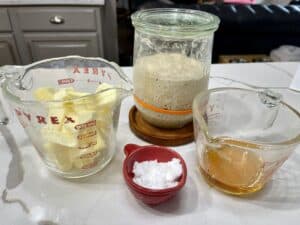
  • Cube your butter into pieces and set it aside.
  • Measure and set aside your salt and honey.
  • I usually put my sourdough starter with the butter, salt, and honey so that I remember that I have to add it as well, but I do not measure it until the autolyse period is over.
    Setting aside remainder of the ingredients during autolyse

MIX YOUR DOUGH:

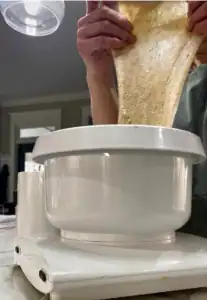
  • After the 1 hour autolyse period, add your Tangzhong mixture, butter, salt, sourdough starter, and honey to the mixer. Mix everything until it is combined. Allow to knead in your mixer until it is stretchy and has a windowpane when you gently pull it up and apart. This usually takes about 8-9 minutes in my Bosch. You can start watching it around the 5-7 minute mark and go minute by minute. If the dough immediately tears, give it another minute or so. If you are using a Kitchen Aid, this will take considerably longer.
    pullman 13 sandwich bread recipe windowpane test

BULK FERMENTATION:

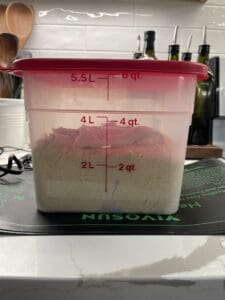
  • Once your dough reaches windowpane, transfer the dough into a straight sided container like a 6L Cambro. You will want to let the dough rise on the counter until it has doubled in size. I typically mark the starting point with a dry erase or chalk marker as well as my goal line.
    Pullman 13 Sandwich Bread recipe bulk fermentation
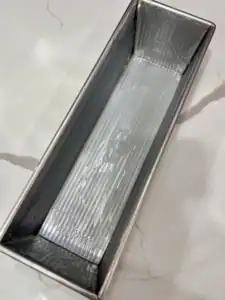
  • Butter the inside of the pan and lid of your Pullman 13 Loaf Pan.
    Buttered Pullman 13 pan

SHAPING:

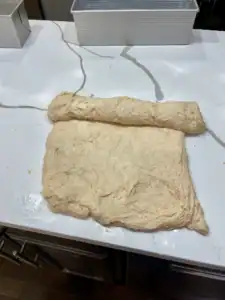
  • After the dough has doubled in size, dump the dough onto the countertop gently shaking it and stretching it into a rectangle just slightly narrower than the width of your Pullman 13 pan. Once you have a rectangle, you are going to roll it up tightly pulling the roll back to tighten it up as you go. Once you have it in a long log, you are going to pinch it of to close it up.
    Rolling up sourdough sandwich bread shaping
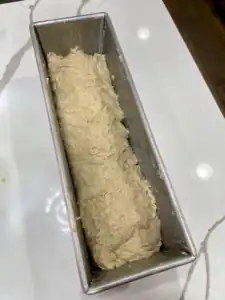
  • Transfer the dough to your Pullman 13 Loaf pan with the seam side down.
    Sourdough sandwich bread recipe ready for second rise

SECOND RISE:

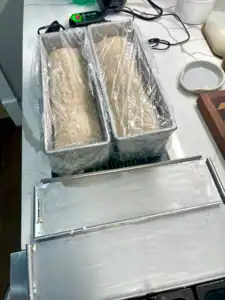
  • Cover your loaf pan with plastic wrap so you can see the rise and keep an eye on it leaving the lid sitting to the side.
    2nd rise on pullman 13 sandwich pans with lids butter set to the side
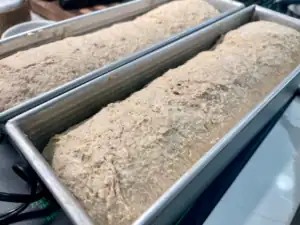
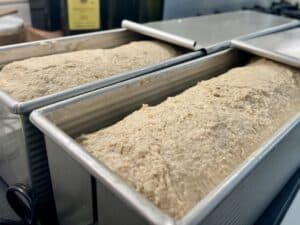
  • Allow the loaf to rise to just about 1" from the top of the pan on the sides. You want to let it rise until when you slide the lid on the pan, it just brushes the center of the loaf. Don't be nervous if the center touches. This will insure that you get perfectly square slices of bread.
    Tangzhong sourdough sandwich bread ready to go into the oven

BAKING:

  • When you see that the loaf is getting close to baking time, preheat your oven to 375 degrees Fahrenheit. Once the oven is preheated, remove the plastic wrap and slide the lid onto your pan.
    Tangzhong sourdough sandwich bread sliding the lids on showing how close to the top they have risen
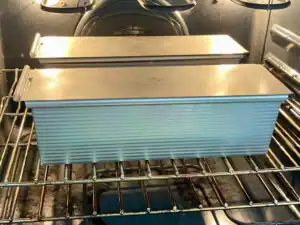
  • Bake the loaf with the lid on for 45-47 minutes till it reaches an internal temperature of 208-210 degrees Fahrenheit. I typically check it around the 45 minute mark and have to bake it for 1-2 minutes more. Your oven may vary.
    Tangzhong Sourdough Sandwich Bread baking with the lid on in the oven
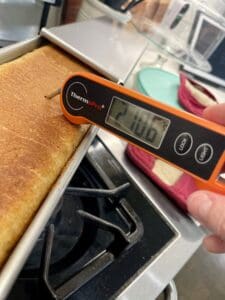
  • Be sure the loaf has an internal temperature of 208-210 degrees then remove the lid.
    Checking the internal temperature of the sandwich bread

COOLING:

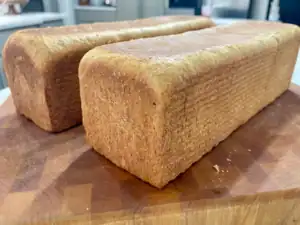
  • Using hot pads, carefully flip the loaf out onto a cutting board or cooling rack. Allow the loaf to cool completely before slicing.
    Tangzhong Soft Sourdough Sandwich Bread Recipe cooling
  • Once the loaf has cooled completely, slice it. We tend to freeze the bread with smaller freezer bags of 4 slices placed into a larger 2 gallon zip lock bag so that we can pull only a few slices out at a time.
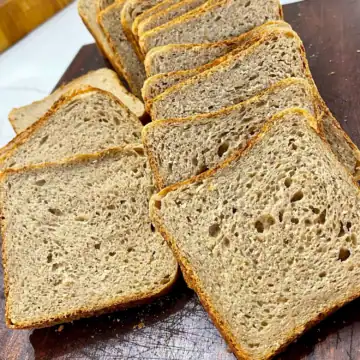
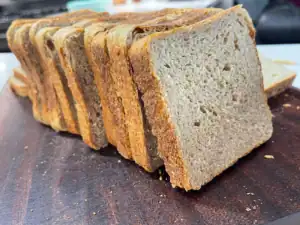
    Soft sourdough sandwich bread recipe sliced

Notes

This recipe can be baked the same day, but you’ll need to start it first thing in the morning.  If you start it later, this recipe has been designed with some flexibility so you can form the loaf and do an overnight proof.  In that case, just pull it out to finish rising in the morning and then bake. 
Keyword Fresh-Milled Flour, Fresh-milled flour sandwich bread, Fresh-milled sourdough sandwich bread, Fresh-Milled Sourdough Sandwich Bread Recipe, soft sandwich bread recipe, super soft sandwich bread recipe
Tried this recipe?Let us know how it was!

A note from a die hard Kitchen Aid fan

February 11, 2026 by Erika

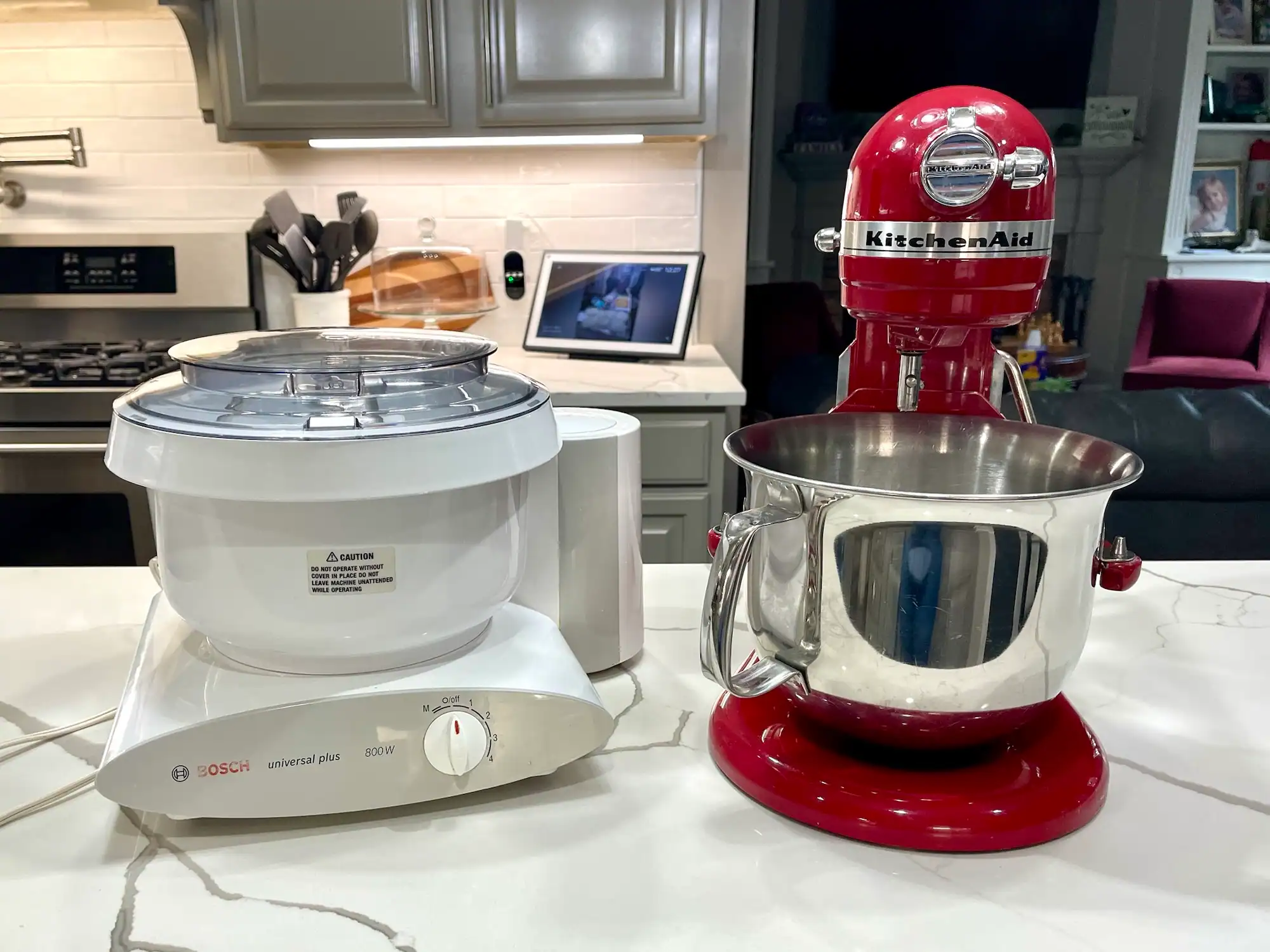
I never thought that I would say it, but if you are a bread maker DO NOT buy a Kitchen Aid Mixer if you are only going to use one mixer in your house.

Now that it’s out in the open, let me explain. I have had a Kitchen Aid mixer for 30+ years. I always highly recommend them. I know they aren’t as good as they once were when Hobart was making them. I adored my 30 quart Hobart mixer at the bakery and it’s probably the one thing that I really wish I hadn’t sold. I even have bought family members Kitchen Aid mixers when they got married because it’s the one thing I always said I couldn’t live without in my kitchen. In fact, when my Kitchen Aid went out in the early 2011-2013 timeframe, I immediately went and bought a new one. That’s the one I still have to this day.

Well, now that I have been doing fresh-milled flour for a little while, I can tell you that for bread makers it’s just not the best option out there. I’m not really sure why it took me that long to come to that conclusion. The fact that they always get hot trying to do bread should have been my first clue.

My Kitchen Aid is old and I really need to do some work on it. I think the gear box needs to be replaced since it doesn’t always start on the first attempt. So, for a while I have been on the hunt for a new mixer. It wasn’t a high priority since I can usually get mine to go. But, I knew it was inevitable that I would need a new one or at very least need to do some rehab to this one. I had been looking at the Kitchen Aid Professional mixers, but those are running in the $900 range currently as a I write this.

I have made all the things in my Kitchen Aid over the years. Cookies, muffins, breads, pies, and it always did a great job…or so I thought. I thought I would get an Ooni spiral mixer since that is suppose to be great with bread. Bread was the one thing I knew my Kitchen Aid struggled with. It was always take forever to knead and I ready mentioned the fact that it would get hot. I thought that if I had something that was excellent for bread, I could continue to use my Kitchen Aid for the other things I love to make.

I did all the research. I read reviews and watched YouTube videos. I had the Ooni Halo Pro Spiral Mixer in my cart and almost hit submit when I paused and did one more YouTube search for reviews. I stumbled upon a reviewer who had so many issues with the breaker bar because of the material it was made of. I think the newness of the mixer and it being made in China was what my hesitation was all about. I ultimately decided to give the Ooni Halo Pro Spiral a little more time to see how it held up long term. I still think that I would like to get my hands on one eventually. I absolutely adore my Ooni outdoor pizza oven!

So, back to the research phase I went. I read reviews and watched more YouTube videos. I was between two mixers, the Bosch Universal Plus and the Ankarsrum. I did not think I would like the center column in the Bosch at all, but with the bottom drive bowl being an option I thought maybe. I honestly was leaning toward the Ankarsrum, but the learning curve and how different it is compared to my Kitchen Aid once again scared me. So, once again, I put the decision on pause.

One morning I saw a Bosch Universal Plus mixer for sale for an insanely low price. Someone had tried to pry the bowl off the base so it had marks on it, but was completely functional and really wasn’t noticeable with the mixing bowl attached. I saw this as my opportunity to give it a try without having to invest the price of a new one. So, I bit the bullet and bought it. I figured that if I hated it I could always sell it and buy the Ankarsrum or eventually buy the Ankarsrum as well.

The Bosch Universal Plus arrived and I put it to work on my bread doughs only. I continued to use my Kitchen Aid for other things. But, that first batch of bread in the Bosch made me realize how pour of a job my Kitchen Aid had really been doing in bread all these years! The Bosch took 7-8 minutes to knead bread where the Kitchen Aid would take 25+ minutes and not do nearly as good of a job. Biting into my first sandwich loaf slice using the Bosch and it not crumbling all over the place! That was a huge revelation since the only change was what mixer that I used to make the bread and it even took less time to knead! I was in shock.

So, if you are an avid bread maker I would highly recommend the Bosch Universal Plus and steer you away from the Kitchen Aid. The Bosch Universal Plus is a beast. I have since made cookies in it and it does struggle with the initial mixing when you only have a couple ingredients in the mixer. For example, it took me longer to cream my butter and sugar in the Bosch simply because it was less than I think it could handle. I need to attempt a double batch in it to see how it handles it especially since I freeze cookie dough balls to make fresh anyway. It didn’t have any issues with a single loaf of bread though so it must be a minimum amount it can handle. Maybe the NurtriMill Artiste Mixer would do a better job on small jobs. I know a lot of people are raving about the Zacme 8.4 qt mixer as well.

I still would like to try the Ooni Halo Pro Spiral and the Ankarsrum. I mean, if either company would like to send me those I would be happy to put them to the test. 😜. But those are my thoughts on the two I currently own for now. If I add the others, I’ll make sure to post and tell you all about it.

Fresh-Milled Sourdough Loaf Recipe

February 11, 2026 by Erika

Crispy on the outside but moist on the inside and full of flavor. You’ll love this fresh-milled sourdough recipe. It incorporates scalding a portion of the fresh-milled flour which gelatinizes the starches and allows the dough to significantly absorb more water. If you have some red hard wheat laying around that you don’t like on it’s own, give this recipe a try!

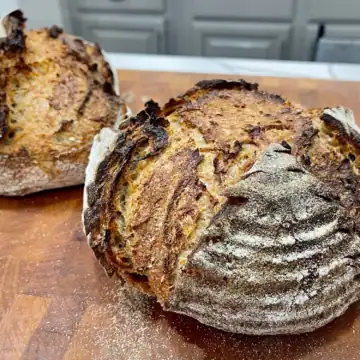
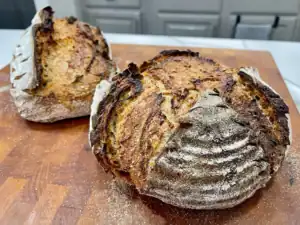
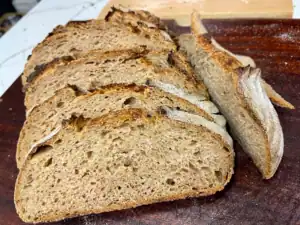
Fresh-milled sourdough bread hot out of the oven

Fresh-Milled Sourdough Loaf Recipe -SINGLE

Erika
This is the recipe I have developed for my fresh-milled sourdough loaves and it's moist inside but crispy on the outside. My family loves the flavor! This recipe has been adapted for only a single loaf. I also have a version for 2 loaves. You will see images of two loaves, but you are only making one in this recipe.
Print Recipe Pin Recipe
Course Breakfast
Servings 1 Loaves

Equipment

  • Flour Mill I use the Nutrimill Harvest
  • Bosch Universal Plus Mixer (or whatever mixer you have)
  • Kettle or use the stove/microwave to heat your water
  • 1 Spatula
  • 4L Cambro I use this for bulk fermentation
  • 1 Bannetons (You could use a bowl if you don't have one. Flourside wood pulp bannetons are my favorite).
  • 1 Flour Dusting Wand
  • 1 Dutch Ovens (or bake the loaves back to back with one)
  • 1 Bread Slings (or parchment paper)
  • 1 Lame to score the bread

Ingredients
  

  • 167 g Hard white wheat berries
  • 167 g Hard red wheat berries
  • 166 g Spelt whole berries
  • 390 g Spring water
  • 100 g Sourdough starter at peak
  • 10 g salt

Instructions
 

  • Mill your wheat berries to a fine flour
    167 g Hard white wheat berries, 167 g Hard red wheat berries, 166 g Spelt whole berries
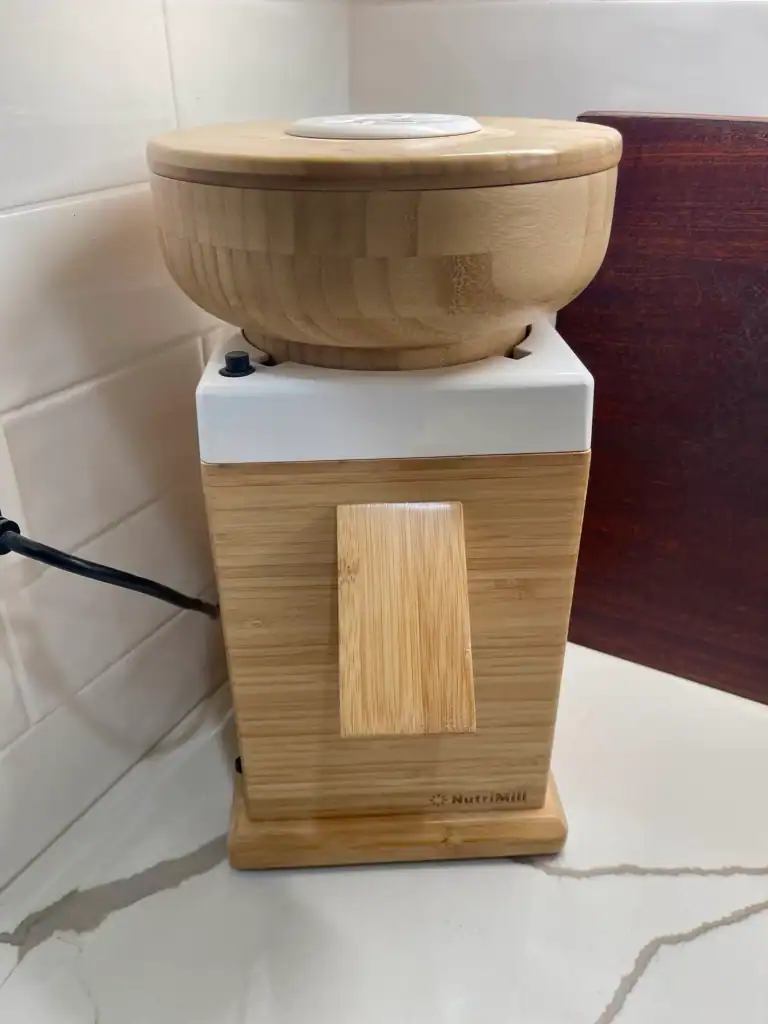
    Nutrimill Harvest Flour Mill
  • Take 100g of the fresh-milled flour and put it in a separate bowl
  • Boil 100g of water and pour over the 100g and mix until all the flour is incorporated. This is scalding a portion of the flour. Do not skip this step.
    scalding a portion of the fresh-milled flour
  • Add the remaining 290g of water to your mixer with the remaining fresh-milled flour and mix until all of the flour is incorporated.
    Fresh-milled flour and water for autolyse period
  • Loosely cover both mixtures and let them autolyse for 1 hour. Do not skip the autolyse period!
  • Measuring your salt in a small bowl to remind you to put it in.
    10 g salt
    salt set aside during autolyse period
  • After the 1 hour has passed, measure your sourdough starter.
    100 g Sourdough starter at peak
    Measuring sourdough starter for recipe
  • Add the sourdough starter and salt to the mixer as well as your scalded dough ball and mix until incorporated.
    Mixing everything together for sourdough loaf recipe
  • Then, knead until it is stretchy and you get a bit of a windowpane. This usually takes me 7-8 minutes in the Bosch Universal Plus. It's ok if it tears a little but stretch gently. If it tears immediately, give it another minute. If you are using a Kitchen Aid mixer, this will take considerably longer.
    checking windowpane on fresh-milled sourdough loaf recipe
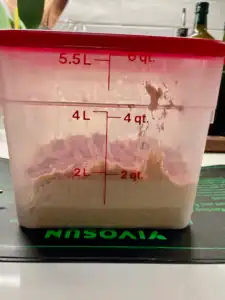
  • Transfer the dough into a straight sided container with markings so you can see the percentage of rise.
    Sourdough Bulk Fermentation
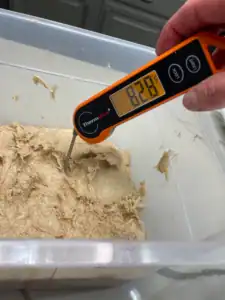
  • Take the temperature of the dough and make a note of it. Temperature affects how quickly the dough will rise and how quickly it will cool off with the overnight cold proof step. I highly suggest that you read and then download and print the chart I have referenced in the notes section of this recipe. We will not be going based on a bulk fermentation time, but rather a percentage. Your goal percentage will vary by season, house temperature, water temperature, etc. If it is really cold in your house, you can get a seedling mat relatively inexpensively to put under your dough to keep it warm.
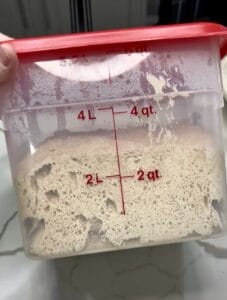
  • Once the dough reaches your goal bulk fermentation percentage, it should have bubbles all the way through the dough and you are ready to proceed with shaping your loaves.
    Sourdough bulk fermentation complete
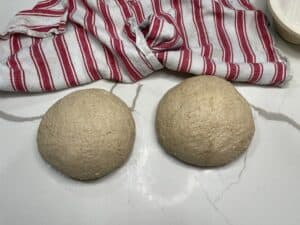
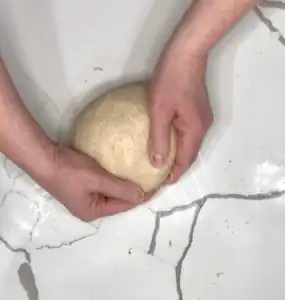
  • Dump your dough out onto your counter. I have quartz and can usually do this without adding additional flour, oil, or water. It is best not to dust your counter with flour at this stage. Gently pre-shape your dough into a ball and cover. Allow it to rest for 20 minutes.
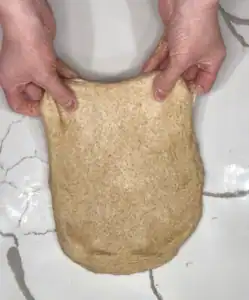
  • After your rest period is over, you will want to do your final shaping. Gently stretch the dough out.
    Sourdough Round shaping process
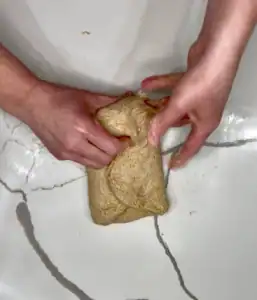
  • fold it over like an envelope
    Sourdough round shaping process
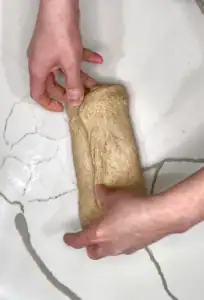
  • Now roll it up.
    Sourdough round shaping process
  • Next do a couple of pulls toward you with both hands to tighten up the surface and give it some tension.
    Sourdough round shaping
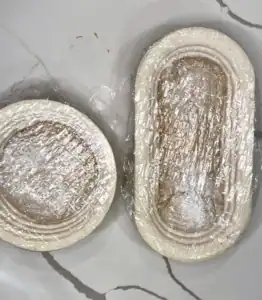
  • Lightly dust your banneton with rice flour and transfer your dough ball into the banneton with the seam up then cover them. I use a food grade plastic cover that have an elastic band in them. They look somewhat like a shower cap. After covering, let your dough rest for 20 minutes.
    Bannetons ready to go into the fridge for overnight cold proof
  • After the 20 minutes of resting has passed, place your banneton in the fridge overnight. I usually cold proof my dough in the fridge for 12 hours minimum. I have even sucessfully done longer.
  • When you are ready to bake your bread, place your dutch oven with the lid on in your oven. Preheat your oven to 475 degrees Fahrenheit.
  • Once the oven is preheated, place a silicone bread sling or parchment paper down on the counter and lightly dust it with rice flour. Take your banneton out of the fridge and remove the covering. Place the bread sling upside down on the top of your banneton and invert it to transfer your dough to the bread sling.
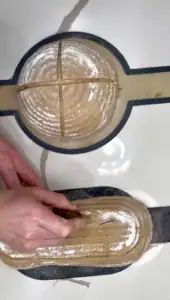
  • Score your bread. A simple score is to cut down the middle on both sides creating 4 sections on a round loaf. Otherwise, you will want to score with your lame horizontal with the countertop and make one quick motion from the top right down to the bottom right of the bread. This allows the bread room to expand in the oven.
  • Spray the top of your loaves with water (I use a hair mister that I bought specifically for that and keep it with my sourdough supplies). Then dust a little additional rice flour on top.
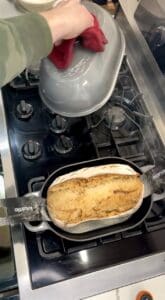
  • Remove the dutch oven from your oven USING OVEN MITS. It will be very hot. Remove the lid. Transfer your bread to the dutch oven with caution so you do not touch it. That's one of the reasons I love the bread slings. Tuck the bread sling ends onto the loaf and close the lid.
  • Transfer the dutch oven into the oven with caution since it will be very hot. Set a timer for 7 minutes.
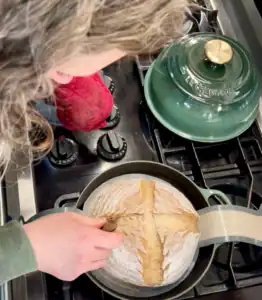
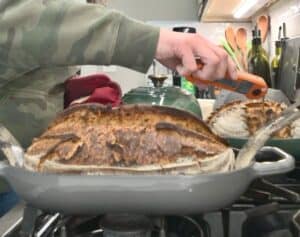
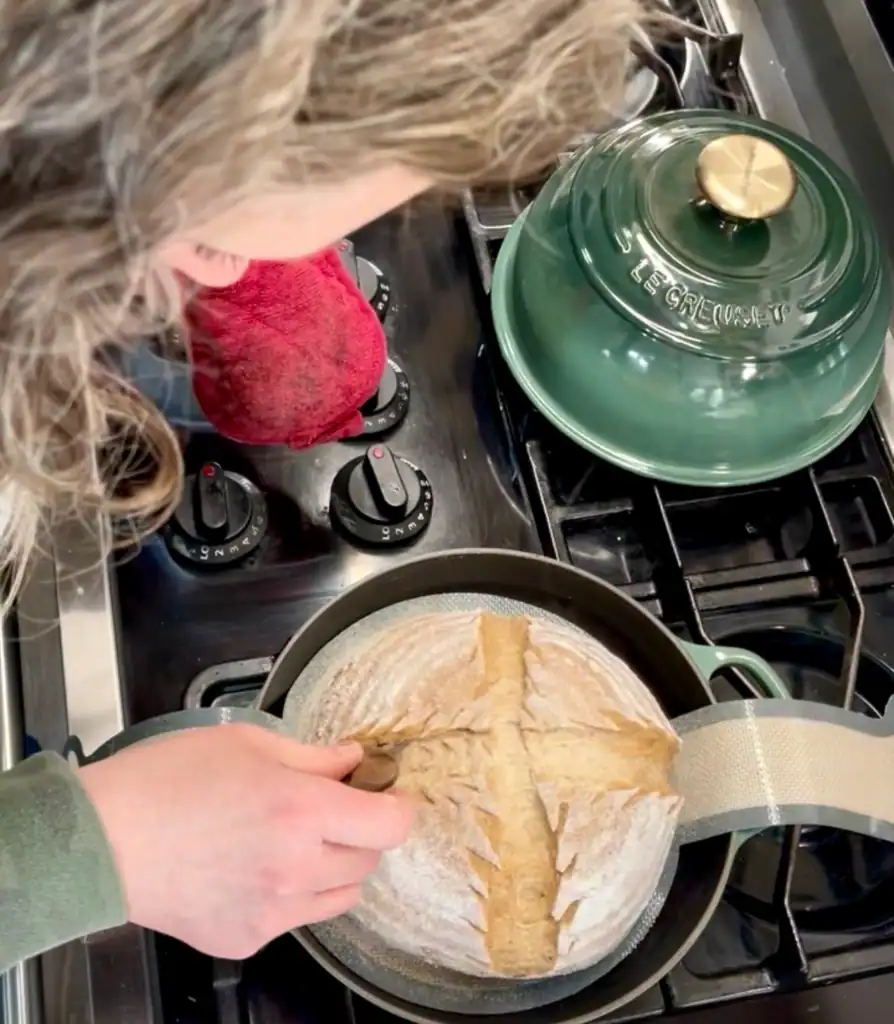
  • Remove the dutch oven from the oven, take the lid off, and retrace your expansion score. This will allow the bread to open up slightly more. Then put the lid back on. Do this and put it back in the oven. Set a timer for 28 minutes.
    retracing score after 7 minutes of baking
  • When the timer goes off, reduce the oven temperature to 450 degrees. Remove the dutch oven from the oven and take the lids off. Then, put the bread back into the oven. Set a timer for 10 minutes to bake the bread with the lid off.
    Removing the lid to continue baking uncovered
  • When the timer goes off, take the dutch oven out of the oven.
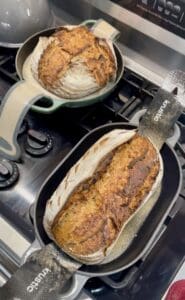
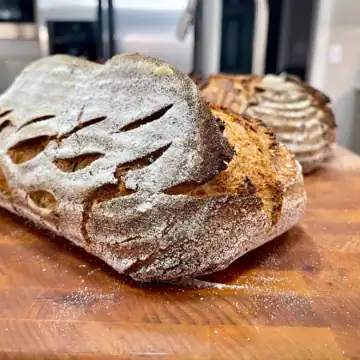
    sourdough loaves hot out of the oven
  • Check that the internal temperature of your bread is around 208-210 degrees to insure that it is cooked completely. If it is not, you may need to put it back in for another minute or so until it reaches that temperature window.
    Make sure to check the internal temperature of your bread when you remove it from the oven
  • Turn off the oven and then transfer the bread with the bread sling to a cooling rack or butcher block to cool completely,. I pull the bread slings out and push the bread to the side so that I can go ahead and wash them.
  • Allow the bread to cool COMPLETELY before you slice into it! It can be very tempting to slice into warm bread, but it will make it slightly gummy and not last as long.
    Fresh-milled sourdough bread hot out of the oven
  • Once your bread has cooled off completely, you can slice and enjoy.

Notes

Read and print the chart from our Bulk Fermentation Based on Temperature for Sourdough Breads.
This recipe is for 1 loaf.  I also have a 2 loaf recipe as well or you can multiply by 2.  I find it easier to just make 2 at a time since it doesn’t take much additional time for the second loaf while you are doing it.
Since our household is down to only 3 of us now, we slice all of the bread, put a few slices in each quart sized bag, and put all of the quart sized bags in a bigger 2 gallon freezer bag. This allows us to pull the bread out of the freezer in smaller portions to thaw and use. We keep a few slices at a time in the refrigerator that way it never goes bad on us. When the big bag in the freezer gets low, it’s time to make more.
Keyword Fresh Milled Sourdough Recipes, Fresh-Milled Flour, Fresh-Milled Flour Recipes, Fresh-milled sourdough loaf, Fresh-milled sourdough loaf recipe
Tried this recipe?Let us know how it was!
Why a 7 minute score?

February 10, 2026 by Erika

Restoring the loaf after 7 minutes of baking

Honestly, when I heard that people were doing a second score or waiting to score altogether after 7 minutes of baking I thought it sounded absolutely unnecessary. That is until I tried it! I had never done back.

What did it do for my loaves? The partial bake allows the crust of the sourdough to begin setting and the ultimate result is enhanced expansion, better oven spring, and that beautiful pronounced ear that is so desired in sourdough baking. Not to mention that it is slightly easier to score once the crust has set. I think it’s a little more forgiving especially with higher hydration loaves.

Haven’t tried it? Give it a try and come back and comment how it went for you! We would love to hear about your results.

Fresh-Milled Sourdough 2 Loaves Recipe

February 9, 2026 by Erika

This is a recipe that I have worked on for a while to achieve the perfect Fresh-Milled Sourdough Loaves. It incorporates scalding a portion of the flour, an autolyse period, and temperature bulk fermentation. I hope your family loves it as much as we do!

Fresh-milled sourdough bread hot out of the oven

Fresh-Milled Sourdough Loaf Recipe – 2 LOAVES

Erika
This is the recipe I have developed for my fresh-milled sourdough loaves and it's moist inside but crispy on the outside. My family loves the flavor! This recipe is for 2 loaves. I also have a scaled down version for only one loaf if you need that one.
Print Recipe Pin Recipe
Course Breakfast
Servings 2 Loaves

Equipment

  • Flour Mill I use the Nutrimill Harvest
  • Bosch Universal Plus Mixer (or whatever mixer you have)
  • Kettle or use the stove/microwave to heat your water
  • 1 Spatula
  • 6L Cambro I use this for bulk fermentation
  • 2 Bannetons (You could use a bowl if you don't have one. Flourside wood pulp bannetons are my favorite).
  • 1 Flour Dusting Wand
  • 2 Dutch Ovens (or bake the loaves back to back with one)
  • 2 Bread Slings (or parchment paper)
  • 1 Lame to score the bread

Ingredients
  

  • 334 g Hard white wheat berries
  • 333 g Hard red wheat berries
  • 333 g Spelt whole berries
  • 780 g Spring water
  • 200 g Sourdough starter at peak
  • 20 g salt

Instructions
 

  • Mill your wheat berries to a fine flour
    334 g Hard white wheat berries, 333 g Hard red wheat berries, 333 g Spelt whole berries
    Nutrimill Harvest Flour Mill
  • Take 200g of the fresh-milled flour and put it in a separate bowl
  • Boil 200g of water and pour over the 200g and mix until all the flour is incorporated. This is scalding a portion of the flour. Do not skip this step.
    scalding a portion of the fresh-milled flour
  • Add the remaining 580g of water to your mixer with the remaining fresh-milled flour and mix until all of the flour is incorporated.
    Fresh-milled flour and water for autolyse period
  • Loosely cover both mixtures and let them autolyse for 1 hour. Do not skip the autolyse period!
  • Measuring your salt in a small bowl to remind you to put it in.
    20 g salt
    salt set aside during autolyse period
  • After the 1 hour has passed, measure your sourdough starter.
    200 g Sourdough starter at peak
    Measuring sourdough starter for recipe
  • Add the sourdough starter and salt to the mixer as well as your scalded dough ball and mix until incorporated.
    Mixing everything together for sourdough loaf recipe
  • Then, knead until it is stretchy and you get a bit of a windowpane. This usually takes me 7-8 minutes in the Bosch Universal Plus. It's ok if it tears a little but stretch gently. If it tears immediately, give it another minute. If you are using a Kitchen Aid mixer, this will take considerably longer.
    checking windowpane on fresh-milled sourdough loaf recipe
  • Transfer the dough into a straight sided container with markings so you can see the percentage of rise.
    Sourdough Bulk Fermentation
  • Take the temperature of the dough and make a note of it. Temperature affects how quickly the dough will rise and how quickly it will cool off with the overnight cold proof step. I highly suggest that you read and then download and print the chart I have referenced in the notes section of this recipe. We will not be going based on a bulk fermentation time, but rather a percentage. Your goal percentage will vary by season, house temperature, water temperature, etc. If it is really cold in your house, you can get a seedling mat relatively inexpensively to put under your dough to keep it warm.
  • Once the dough reaches your goal bulk fermentation percentage, it should have bubbles all the way through the dough and you are ready to proceed with shaping your loaves.
    Sourdough bulk fermentation complete
  • Dump your dough out onto your counter. I have quartz and can usually do this without adding additional flour, oil, or water. It is best not to dust your counter with flour at this stage. Dump the dough onto your counter and split it into 2. Gently pre-shape the two equal dough sections into balls and cover. Allow them to rest for 20 minutes.
  • After your rest period is over, you will want to do your final shaping. You will do the shaping for one dough ball and then repeat and do it for the other one. On the first dough ball, gently stretch the dough out.
    Sourdough Round shaping process
  • fold it over like an envelope
    Sourdough round shaping process
  • Now roll it up.
    Sourdough round shaping process
  • Next do a couple of pulls toward you with both hands to tighten up the surface and give it some tension.
    Sourdough round shaping
  • Lightly dust your bannetons with rice flour and transfer your dough balls into the banneton with the seam up then cover them. I use food grade plastic covers that have an elastic band in them. They look somewhat like a shower cap. After covering, let your dough rest for 20 minutes.
    Bannetons ready to go into the fridge for overnight cold proof
  • After the 20 minutes of resting has passed, place your banneton in the fridge overnight. I usually cold proof my dough in the fridge for 12 hours minimum. I have even sucessfully done longer.
  • When you are ready to bake your bread, place your dutch oven with the lid on in your oven. Preheat your oven to 475 degrees Fahrenheit.
  • Once the oven is preheated, place a silicone bread sling or parchment paper down on the counter and lightly dust it with rice flour. Take your banneton out of the fridge and remove the covering. Place the bread sling upside down on the top of your banneton and invert it to transfer your dough to the bread sling.
  • Score your bread. A simple score is to cut down the middle on both sides creating 4 sections on a round loaf. Otherwise, you will want to score with your lame horizontal with the countertop and make one quick motion from the top right down to the bottom right of the bread. This allows the bread room to expand in the oven.
  • Spray the top of your loaves with water (I use a hair mister that I bought specifically for that and keep it with my sourdough supplies). Then dust a little additional rice flour on top.
  • Remove the dutch oven from your oven USING OVEN MITS. It will be very hot. Remove the lid. Transfer your bread to the dutch oven with caution so you do not touch it. That's one of the reasons I love the bread slings. Tuck the bread sling ends onto the loaf and close the lid. Repeat for the other loaf.
  • Transfer the dutch ovens into the oven with caution since they will be very hot. Set a timer for 7 minutes.
  • Remove the dutch ovens from the oven, take the lid off, and retrace your expansion score. This will allow the bread to open up slightly more. Then put the lid back on. Do this on both loaves and put them back in the oven. Set a timer for 28 minutes.
    retracing score after 7 minutes of baking
  • When the timer goes off, reduce the oven temperature to 450 degrees. Remove the dutch ovens from the oven and take the lids off. Then, put the bread back into the oven. Set a timer for 10 minutes to bake the bread with the lid off.
    Removing the lid to continue baking uncovered
  • When the timer goes off, take both dutch ovens out of the oven.
    sourdough loaves hot out of the oven
  • Check that the internal temperature of your bread is around 208-210 degrees to insure that it is cooked completely. If it is not, you may need to put it back in for another minute or so until it reaches that temperature window.
    Make sure to check the internal temperature of your bread when you remove it from the oven
  • Turn off the oven and then transfer the bread with the bread sling to a cooling rack or butcher block to cool completely,. I pull the bread slings out and push the bread to the side so that I can go ahead and wash them.
  • Allow the bread to cool COMPLETELY before you slice into it! It can be very tempting to slice into warm bread, but it will make it slightly gummy and not last as long.
    Fresh-milled sourdough bread hot out of the oven
  • Once your bread has cooled off completely, you can slice and enjoy.

Notes

Read and print the chart from our Bulk Fermentation Based on Temperature for Sourdough Breads.
This recipe is for 2 loaves.  You can divide it in half and only make one if you like.  I find it easier to just make 2 at a time since it doesn’t take much additional time for the second loaf while you are doing it.
Since our household is down to only 3 of us now, we slice all of the bread, put a few slices in each quart sized bag, and put all of the quart sized bags in a bigger 2 gallon freezer bag. This allows us to pull the bread out of the freezer in smaller portions to thaw and use. We keep a few slices at a time in the refrigerator that way it never goes bad on us. When the big bag in the freezer gets low, it’s time to make more.
Keyword Fresh Milled Sourdough Recipes, Fresh-Milled Flour, Fresh-Milled Flour Recipes, Fresh-milled sourdough loaf, Fresh-milled sourdough loaf recipe
Tried this recipe?Let us know how it was!
Getting a Sourdough Starter

February 9, 2026 by Erika

You have decided you want to give Sourdough a shot. Well, you need a sourdough starter, right?

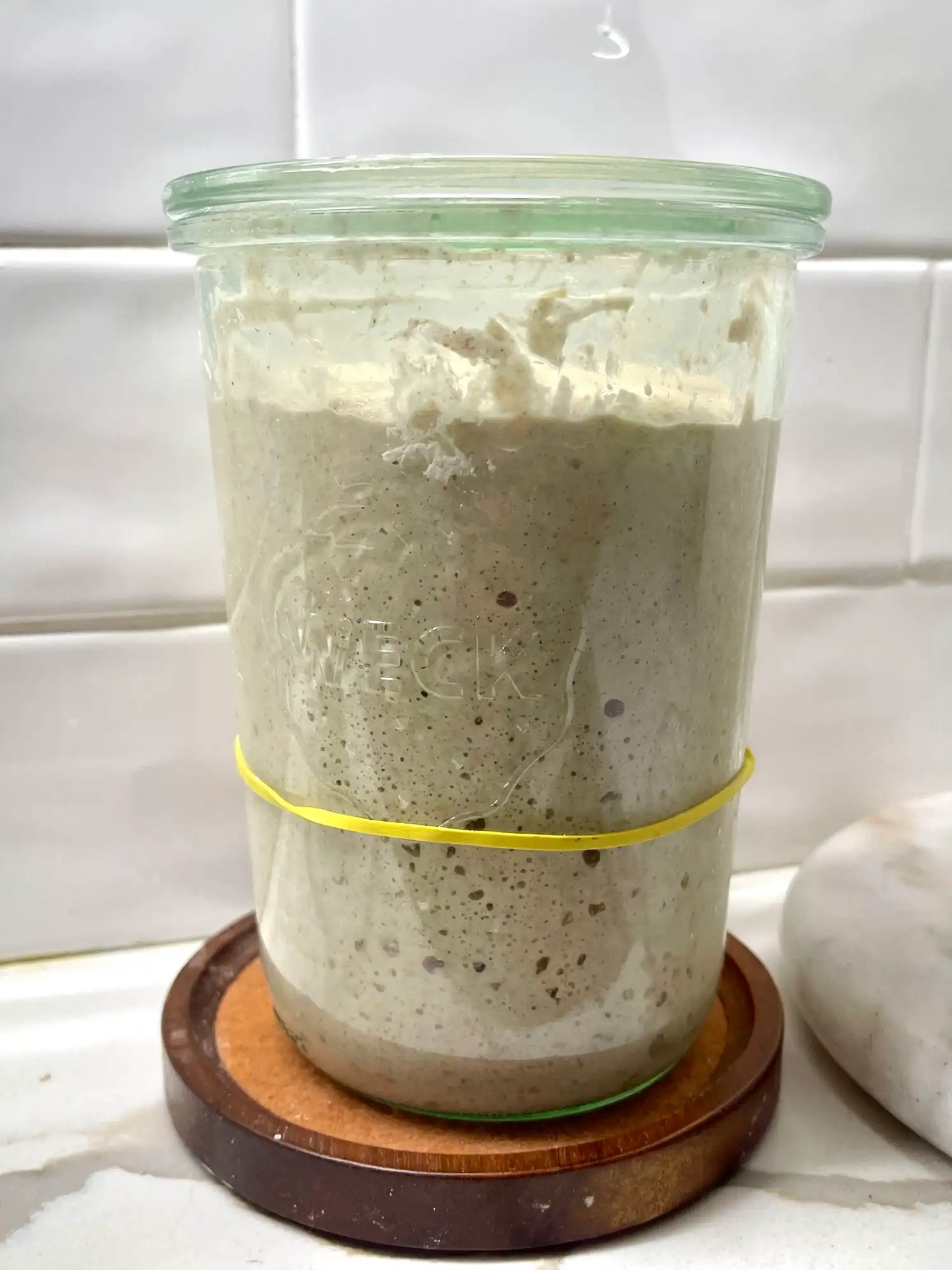
sourdough starter

You have two options:

  1. Get a sourdough starter from a friend or someone local. A lot of times if you post in a local Facebook group that you are wanting to start sourdough, you will have several people volunteer to give you a start. This is by far the easiest way to get going. Remember that as soon as you feed the starter in your home it will be a completely different starter based on your environment, water, flour, etc.
  2. If you have a friend that does sourdough that lives across the country, they can send you some starter dehydrated. You will just have to re-hydrate it and give it a few feedings to get it back on track.
  3. Start your own starter. This is what I did. It can take a lot of patience to get established. I would highly recommend that if you are wanting to start a sourdough starter, go print out the How to Create A New Starter by Tom Cucuzza The Sourdough Journey guide. This is full of valuable information and walks you through each part of the process step-by-step with photos.

What are you waiting for? Get a starter going now so you can get to baking!

10 Things I wish I had known starting Fresh-Milled Flour

February 9, 2026 by Erika

Just starting or considering getting into fresh-milled flour?

Here is a detailed list of all of the things that I wish I had known starting out as a beginner in Fresh-Milled flour.

wheat berry storage
  1. When purchasing your wheat berries, a lot of people get hard red wheat berries as their first one and don’t like the bread it produces. Honestly, I never make breads with 100% hard red. It can produce a more dense, heavy bread. The wheat berry that we go through the most in our household is by far hard white. I use it in a lot of my blends. So, if you could only get one wheat berry I would opt for hard white. However, keep in mind that some people think it can be a little bland on its own; therefore, I would suggest a blend of 70% hard white and 30% Khorasan or spelt.
  2. You don’t need to disregard all of your old recipes and only make fresh-milled flour recipes. Experiment with recipes you love! Of course, I have recipes on this site that I have tested and proven to be successful. If experimenting scares you, try some of ours!
  3. Fresh-milled flour needs more hydration than store bought flour. An autolyse is something I never did prior to starting fresh-milled flour, but now I feel it is absolutely necessary. What is an autolyse? It’s a period of time at the beginning of your recipe where you let the flour and water hydrate before adding the yeast/sourdough and salt. It initiates gluten development and helps your overall bread structure.
  4. If you want to use your existing bread recipes, you may have to increase the hydration percentage. For example, I went from 75% with store flour to 80-85% with FMF.
  5. When I was doing sourdough with store bought flour, I was mixing by hand and doing all of my stretch and folds by hand. I found transitioning to fresh-milled flour, that the mixer was my friend and just made it easier. I believe that fresh-milled flour recipes not only need additional hydration and a longer time to absorb the water, but additional up front gluten development helps greatly.
  6. If you join fresh-milled flour Facebook groups, you will quickly see that so many people use the Bosch Universal Plus or Ankarsrum mixers rather than a Kitchen Aid. I have had a Kitchen aid for 30+ years and never imagined getting another mixer. With my Kitchen aid getting old and needing some work, I was on the look out for a new one. I happened to get a deal on a Bosch Universal Plus Mixer figuring that if I hated it I could just sell it. Well, it made me realize that my Kitchen Aid SUCKS at bread doughs. It use to take my Kitchen Aid 25+ minutes to knead bread dough to somewhat of a windowpane. Then I got the Bosch and it could produce a beautiful windowpane in just 7-8 minutes. That windowpane was no where near comparable to what my Kitchen Aid produced. The first loaf of sandwich bread I made with the Bosch was no longer crumbly. Which made me conclude that the gluten development was one of the keys in making Fresh-Milled Flour loaves. So, if you are in the market for a mixer with Fresh-Milled Flour breads the Bosch Universal Plus is a beast! I still regularly use my Kitchen Aid for other things though.
  7. It might be tempting to ease in by using 25-50% fresh-milled flour in your recipes. Feel free to do that. I in fact did, but quickly realized that I should just jump right in. This is completely up to you. I would highly recommend that you make your breads with 100% fresh-milled flour to get all of the benefits though. Don’t be scared! You’ll get it down.
  8. If you already do sourdough, don’t be afraid to continue to feed your starter store bought flour to use it up, but make all of your bread items with 100% fresh-milled flour.
  9. When making cookies or muffins, a short time in the refrigerator or even putting cookie dough balls in the freezer is helpful. This allows the flour a little additional time to absorb the liquids.
  10. It may sound crazy, but you will probably find yourself snubbing your nose at store bought flour items within a short period of time and just not find them appealing anymore.

Homemade Dog Treats (EGG FREE)

February 9, 2026 by Erika

Looking to make your dog a special treat for their birthday or perhaps just make their dog treats at home instead of buying store-bought? These are an easy to make dog treat with only a few ingredients. I’m sure your dog will love them like mine do!

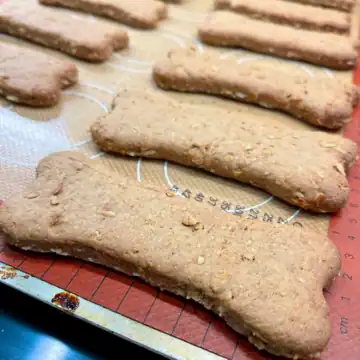
Homemade Dog Treats (EGG FREE)

Erika
These dog treats are made with only a few ingredients so they are easy to make and you know exactly what goes into them. Make them for your dog as a special birthday treat or use these to substitute store bought treats. They are egg free in case your dog happens to be allergic to egg.
Print Recipe Pin Recipe
Course Dog Treats

Equipment

  • 1 Kitchen Aid Mixer (or whatever mixer you have)
  • 1 Spatula
  • 1 Rolling Pin
  • 1 Dog Bone Cutter (See my Amazon Storefront or the notes section if you need to get some.)
  • 1 Cookie Sheet
  • 1 Parchment paper or silicone baking mat

Ingredients
  

  • ½ c Peanut butter
  • ¼ c Honey
  • 1 tablespoon Olive Oil
  • 1 c Chicken or beef broth
  • 1 c Rolled oats
  • 1 c Whole wheat flour
  • 1 c All-purpose flour

Instructions
 

  • Preheat the oven to 350 degrees Fahrenheit.
  • Mix together in the mixer all of the ingreditents until incorporated.
  • Transfer to a silicone mat or countertop dusted with flour and roll out to approximately ¼ inch thick. Cut dough into bone shapes or any other shape you have on hand. Transfer cut out shapes to a cookie sheet for baking and continue to re-roll scraps until all of the bones are cut out and on your baking sheet.
  • Bake the bones for 14-16 minutes until slightly brown on the edges. Turn off the oven and allow them to remain in the oven to crisp up for another 30 minutes. After 30 minutes, remove them from the oven and allow them to cool completely.

Notes

If you need to get a set of dog bone cutters, I have a couple in my Amazon storefront.  The ones that I have are no longer available, but these look like they would be good ones.
Keyword Dog treats, eggless dog treats, homemade dog treats
Tried this recipe?Let us know how it was!

Bulk Fermentation Based on Temperature for Sourdough Breads

February 7, 2026 by Erika

Do your sourdough loaves ovenproof? Are you letting your dough double then doing an overnight cold proof? That could very well be the issue that is causing you problems.

Using an overnight cold proof and allowing your dough to rise until it is till doubled will often result in overproofed bread. Let me explain a little further.

By the time you form your loaves and put them in the fridge, it takes some time for them to cool down to fridge temperature allowing the dough to continue to rise and often overproof. The warmer your dough is the more of an issue this can be.

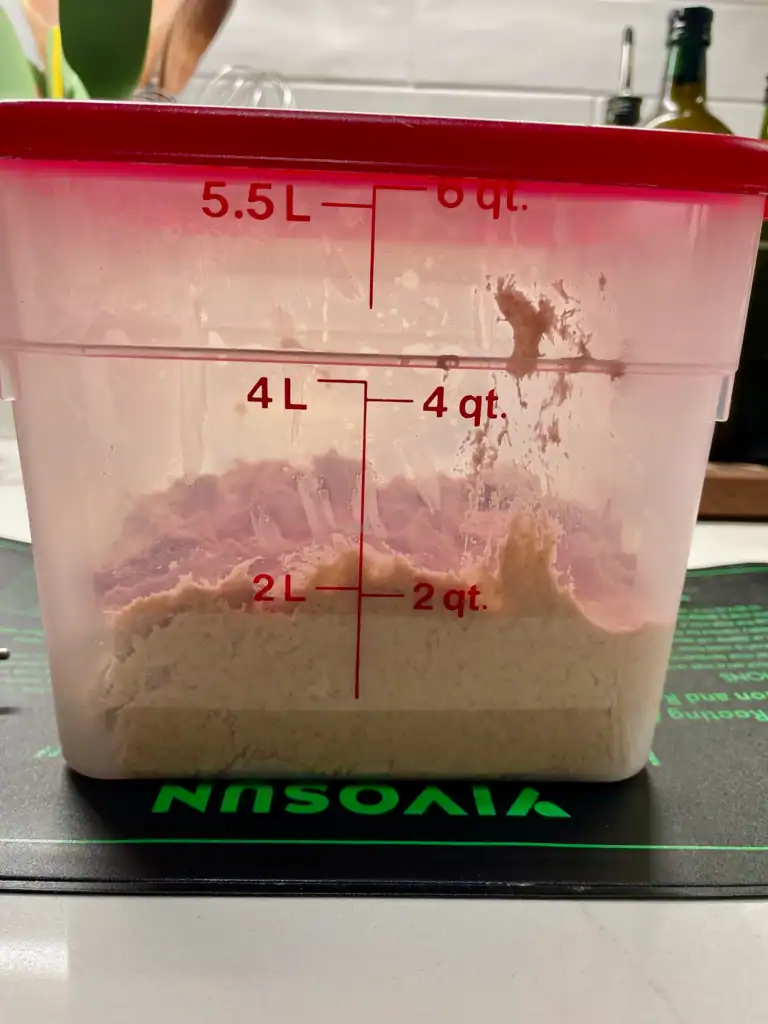
To combat this, the best thing to do is account for the dough temperature. Using a straight sided cambro with markings on the side note your starting point. Then take the temperature of the dough and compare that temperature to The Sourdough Journey chart to see what percentage rise you should aim for. I will often use a wipeable marker and mark my aim, but you may have to check the temperature again if your dough warms up or cools off a lot. Completely ignore the time part of the chart though because every dough is different and yours may go faster or take longer. I only look at the percentage rise and watch for the dough to achieve that. You will also notice as it approaches that rise there will be more and more bubbles and the bubbles will be all over the sides through the entire dough.

For example, if your dough is at the 2L mark and the chart says you should aim for a 40% rise, you would start forming your loaves when your dough reaches the 2.8L mark. It sounds more complicated than it is, but it will save you so many headaches.

Your dough temperature will be relatively constant and may change from season to season, but once you use the chart a few times you’ll get a feel for when you need to form your loaves. If it is really cold in your house, you can get a seedling mat relatively inexpensively to put under your dough to keep it warm.

Save a copy of this chart to your phone or print it out to have in your kitchen. You’ll thank me when your loaves are consistently successful.

Get Your The Sourdough Journey Bulk Fermentation Chart Here

Sourdough Starter Feeding

February 6, 2026 by Erika

Have you recently started Sourdough or you have been failing miserably at it? Most of the times a couple of small tweaks can lead you on the road to success. One of the most common mistakes is feeding your starter incorrectly. Here are a few tips that may help you.

  • Not discarding from your sourdough starter before you feed – I know it seems like you are throwing away your hard work, but in the first 7-10 days you won’t be able to use that discard because of the bad bacteria in the starter. Once the good bacteria wins, then you will be able to use that discard in Sourdough Discard Recipes. For now, chuck in the trash and go on with it. If you don’t discard, you would have to feed your starter so much more flour and water that it just wouldn’t be cost effective. Even after your starter is established, you would be surprised how little discard you need to keep in order to bake all of the goodies you want.
  • Going along with the not feeding your starter enough – Get a kitchen scale so you can accurately weigh your ingredients. Flour and water don’t weigh the same so it’s not as easy as feeding 1 cup of flour and 1 cup of water. That wouldn’t lead to an equal feeding. I have a couple of great kitchen scales in my Amazon Storefront if you want to check them out.
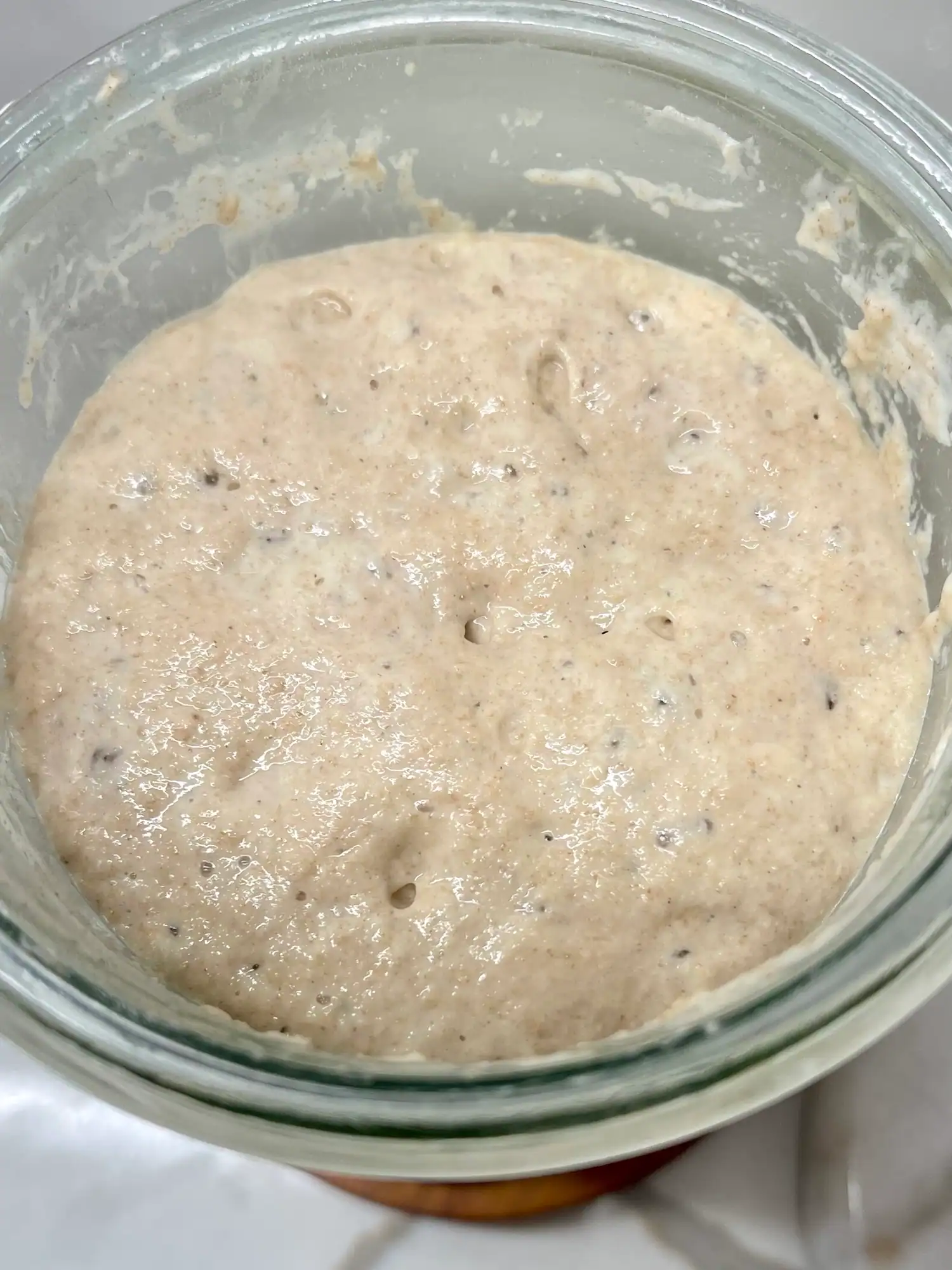
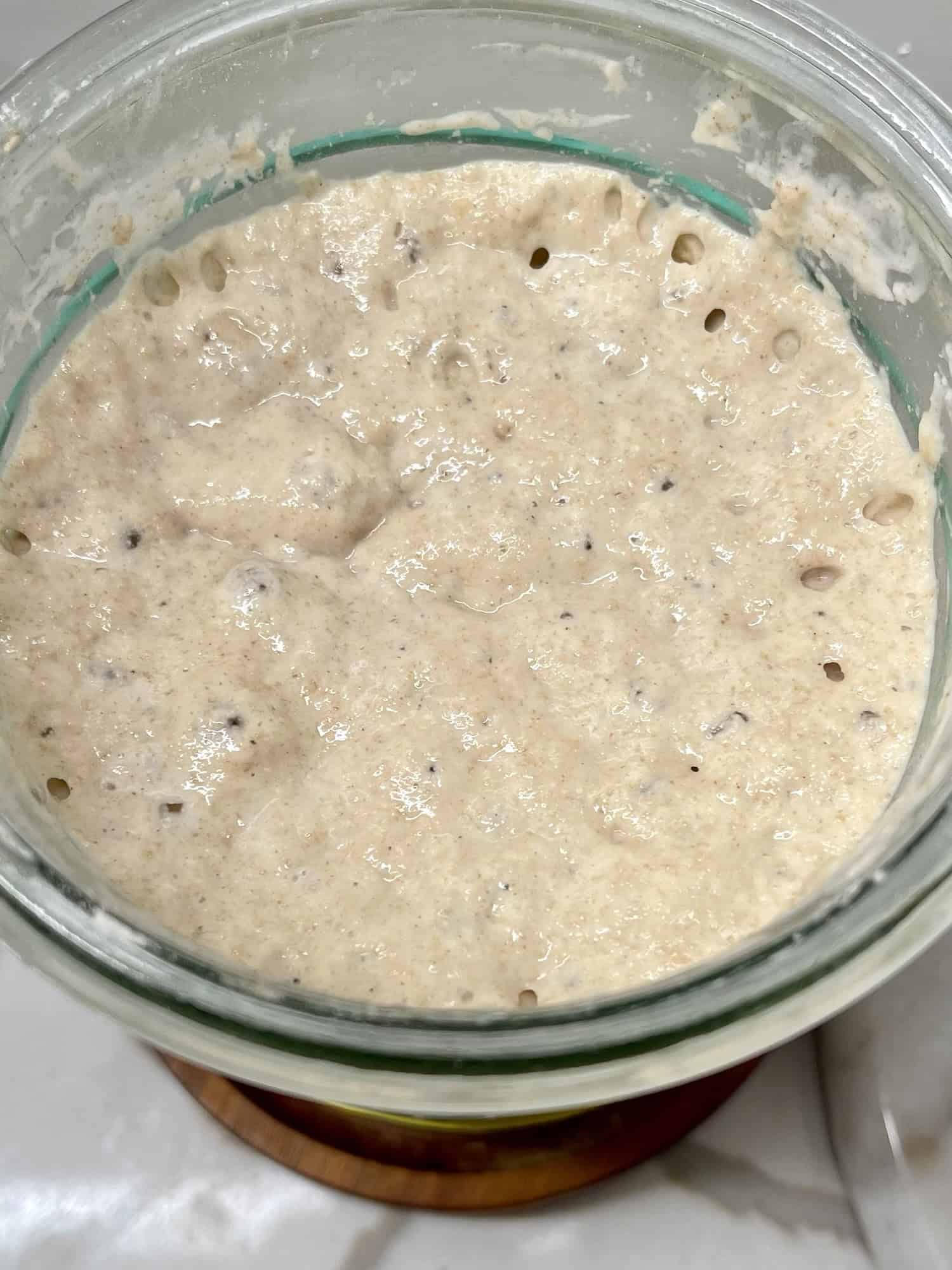
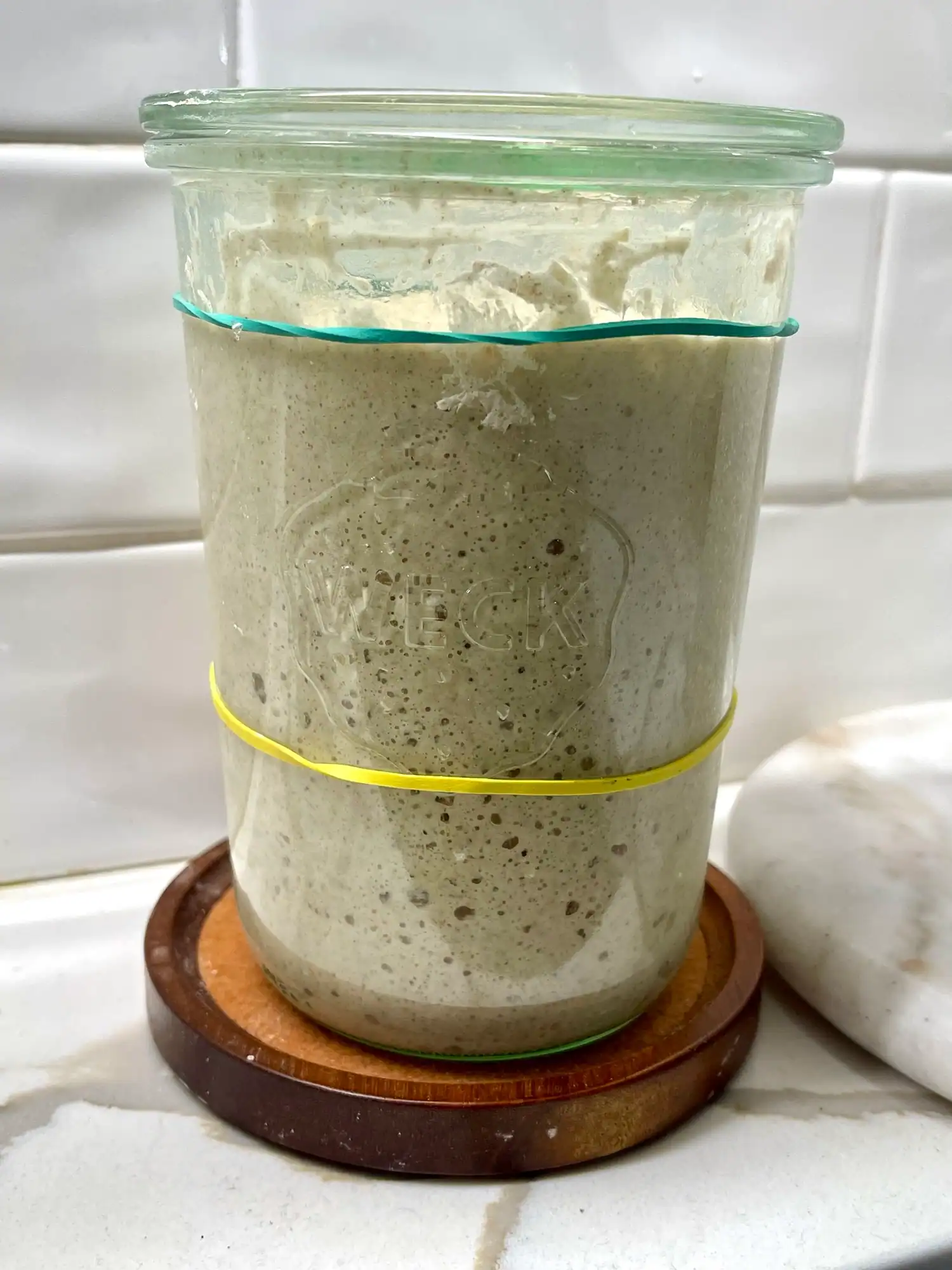
  • Feeding your sourdough starter too soon – I hear a lot of sourdough bakers say they bake with or feed when their starter doubles. That’s not necessarily correct. In fact, feeding your starter too soon can actually weaken it. You will want to wait until your sourdough starter has stopped rising and is at it’s peak. How do you tell if it’s still rising? The starter will be rounded off at the top when it is still rising plus there will not be bubbles on the surface or not many bubbles. Once the starter has reached it’s peak, you will see the entire surface covered in bubbles and craters from where the bubbles have collapsed. Plus, the top will be flattened out rather than being rounded of puffy looking.
  • Feeding your sourdough starter the wrong things – Does your water have chlorine in it? Are you using unbleached flour? The chlorine/bleach in those things will kill off your good bacteria which is what will eventually rise your dough and make beautiful bread. So, you want to use only unbleached or fresh-milled flour plus chlorine free water. I use a bottled spring water for all of my breads and sourdough just to be safe.

This is my starter almost at peak, but still rising:

This is my sourdough starter at peak:

If you are unsure if your starter has peaked:

  • Add a rubber band after you feed your starter as a start point
  • Add a rubber band around the top line if you believe your starter has peaked and wait a little while. If your starter goes above the top rubber band, it is still rising. If it stays the same, you are probably at peak and its’ time to use it or discard and feed it. If it drops down below the rubber band, your starter is beginning to fall so now is definitely a good time to feed it or use it. You really don’t want to wait till it has completely collapsed to discard and feed, but feeding it too later is better than feeding it too early.

I hope these small tips were helpful and lead you to a successful sourdough journey! Comment if you have any questions and I would be happy to answer them!

Final note on starting a starter from scratch:

If you are in the process of doing some research and haven’t started your sourdough journey yet, I want to supply you with a tool that helped me when I started. I would highly recommend that if you are wanting to start a sourdough starter, or struggling in the beginning stages of a sourdough starter, go print out the How to Create A New Starter by Tom Cucuzza The Sourdough Journey guide. This is full of valuable information.

Fresh-Milled Chocolate Chip Cookie Recipe

February 3, 2026 by Erika

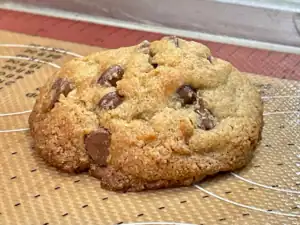
Fresh-milled chocolate chip cookie recipe

Fresh-Milled Chocolate Chip Cookie Recipe

Erika
These chocolate chip cookies are super soft and full of whole grains. These are a staple in our house and our freezer always has these ready to pop into the oven at any time.
Print Recipe Pin Recipe
Course Dessert
Cuisine American
Servings 29

Equipment

  • Bosch Universal Plus Mixer
  • 1 Cookie Scoop
  • 1 Parchment Paper/Silicone Mat
  • 1 Freezer safe container (If you are going to freeze the dough balls which I highly recommend)
  • 1 Silicone spatula

Ingredients
  

  • 177 g Hard white wheat berries
  • 167 g Soft white wheat berries
  • 168 g Spelt wheat berries
  • 1 teaspoon Baking soda (6g)
  • 1 teaspoon Salt (6g)
  • 2 sticks Unsalted butter (1c)
  • 1 ½ c Organic sugar (352g – I get mine from Azure Standard. If you don't have the organic sugar see notes for substitution).
  • 1 ½ tablespoon Molasses (I like to use the Azure organic old fashioned molasses)
  • 2 Large eggs
  • 2 ½ Cups Chocolate chips (455g – I use a mix of 1 ½ cups semi-sweet, ½ cup milk, and ½ cup dark organic chocolate chips from Azure Standard)

Instructions
 

  • Using the Dry Grains Vitamix container I blend the organic sugar to make it finer.
  • Mix together the sugar and molasses until it is completely combined and there aren't big chunks of molasses.
  • Cream together the butter into the sugar mixture using the mixer.
    chocolate chip cookie batter
  • Add the vanilla and eggs to the creamed mixture and beat till light and fluffy.
  • Add the baking soda and salt and mix till combined.
  • Finely mill the wheat berries and add to the mixer. Mix until combined and all the flour is incorporated.
  • Add the chocolate chips and mix by hand.
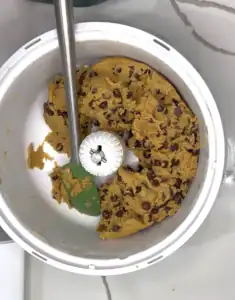
    chocolate chip cookie dough
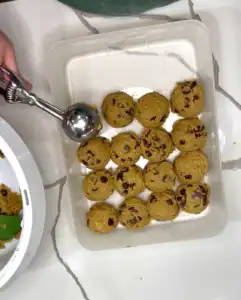
  • Ball the cookie dough with a cookie scoop. I tend to make these pretty large using a 3 Tablespoon Cookie Scoop. I put all of the cookie balls into a container and put them in the freezer.
    chocolate chip cookie dough balls
  • When you want some warm chocolate chip cookies, preheat the oven to 375 degrees Fahrenheit. Once the oven is preheated, take how ever many cookie dough balls out of the freezer that you want to make, and place them on a cookie sheet with either parchment paper or a silicone mat. Bake for 8-10 minutes depending on the size of your dough balls. With the scoop I use, I bake them for 10 minutes until they are golden.
    Fresh-milled chocolate chip cookie recipe

Notes

Remember that the cookies should be light in color and will continue to bake on the cookie sheet while they cool so be careful not to over bake them.
Substitutions:  
If you don’t have the organic sugar and molasses, you can substitute with ¾c white sugar and ¾ cup brown sugar.  Please note that your bake times will change with white sugar.  Organic sugar tends to bake and darken much quicker due to the additional molasses in it.
 
Keyword Desserts, Fresh-Milled Dessert Recipes, Fresh-Milled Flour, Fresh-Milled Flour Recipes
Tried this recipe?Let us know how it was!
Fresh-Milled Cream of Wheat

February 3, 2026 by Erika

Cream of Wheat made exactly the way you like it! Plus, you can alter the flavor by using different wheat berries.

cream of wheat recipe with spelt fresh-milled flour

Fresh-Milled Cream of Wheat Recipe

Erika
Cream of wheat…but taken to the next level. This fresh-milled cream of wheat recipe is rich, cozy, and full of whole-grain goodness. Store bought cream of wheat just cant compare.
Print Recipe Pin Recipe
Course Breakfast
Cuisine American
Servings 1

Equipment

  • Grain Mill (I use the Nutrimill Harvest)
  • 1 Small Pot
  • 1 whisk
  • 1 Spatula
  • Bowl for serving

Ingredients
  

  • ¼ c Wheat Berries of your choice (I used spelt)
  • 1 c Milk
  • 1 tablespoon Honey
  • 1 teaspoon Cinnamon Sugar
  • 1 pinch salt

Instructions
 

  • Measure and mill your wheat berries. You will mill the wheat berries to a coarse setting. (You can milled them directly into the pot to save dirty dishes, but I think it's best to heat the milk up first before adding the flour.)
    Stone Flour Mill
  • Heat 1 cup of milk on the stove till warm
  • Add ¼ cup fresh-milled flour to warm milk and stir
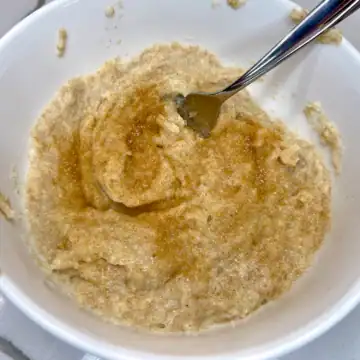
    cream of wheat recipe with spelt fresh-milled flour
  • Continue to stir until it is the thickness you desire and then remove from the heat.
  • Add a drizzle of Honey (approximately 1 Tbsp) plus a pinch of salt and stir till combined.
  • Transfer to a bowl.
  • Optional: You can sprinkle the top with cinnamon sugar, but don't stir it in.
    cream of wheat recipe with spelt fresh-milled flour

Notes

Notes on thickness: 
Remember to remove it from the heat immediately to add the honey because it will continue to thicken on the stove even with the heat off.  The great thing about making your own cream of wheat is you can adjust the texture to exactly how you like it. 
If you want to adjust the ratio here are some notes:
3:1 for thick and creamy texture
4:1 for medium and smooth texture (This recipe is written in a 4:1 ratio)
5:1 for thin and watery texture
Keyword cream of wheat, fresh-milled cream of wheat recipe, Fresh-Milled Flour, Fresh-Milled Flour Recipes
Tried this recipe?Let us know how it was!

Fluffy Fresh-Milled Sourdough Discard Pancakes

January 31, 2026 by Erika

These hearty pancakes are a great starter fresh-milled flour recipe or an excellent way to use up sourdough discard if your jar is getting a little full. They are fluffy and filling pancakes which make for a great breakfast. You’ll be surprised how fast you get full.

fresh-milled sourdough discard pancakes

Fresh-Milled Sourdough Discard Pancakes

Erika
These are fluffy pancakes made from both fresh-milled flour and sourdough discard are a total win! Plus, they are so very filling.
Print Recipe Pin Recipe
Course Breakfast
Cuisine Sourdough
Servings 12

Equipment

  • 1 Bowl
  • 1 Flour Mill (I use the Nutrimill Harvest)
  • 1 whisk
  • 1 Spatula
  • 1 Griddle (You can cook these on a Blackstone, cast iron skillet, or whatever skillet you have on hand)

Ingredients
  

  • 92 g Hard white wheat berries
  • 92 g Soft white wheat berries
  • 92 g Spelt wheat berries
  • 10 g Baking powder (2 tsp)
  • 8 g Baking Soda (1 ¼ tsp)
  • 30 g Granulated sugar (2 Tbsp)
  • 8 g Salt (1 tsp)
  • 250 g Sourdough Discard (1 cup)
  • 1 ½ c milk (I use whole milk)
  • 1 egg
  • 24 g Avocado oil for in batter plus some for oiling skillet (2 Tbsp)

Instructions
 

  • Measure all of your ingredients
    fresh-milled sourdough discard pancake recipe
  • Mill your wheat berries into a fine flour.
    Nutrimill Harvest Flour Mill
  • Mix together milk, sourdough discard, baking powder, baking soda, granulated sugar, salt, avocado oil, and egg.
  • Add your fresh-milled flour to your other ingredients and mix until completely combined. Be sure to get all of the flour at the bottom of the bowl, but be careful not to overmix.
  • Leave the mixture sit until it begins to bubble while you preheat your griddle.
  • Oil your skillet with avocado oil or butter and allow it to heat up at medium-low heat.
  • Pour/ladle your batter onto the hot griddle. Cook until the batter bubbles on the top of the pancakes before flipping them over. Continue to cook the other side until golden brown and cooked through.
    pancakes cooking
  • Serve the pancakes warm with butter and syrup.
    fresh-milled sourdough discard pancakes

Notes

Optional: Add Blueberries or chocolate chips to the batter.
Keyword Fresh Milled Flour, English Muffins, Sourdough, Fresh Milled Sourdough Recipes, Fresh-Milled Flour, Fresh-Milled Flour Recipes, Sourdough Discard Recipes
Tried this recipe?Let us know how it was!
Fresh-Milled Sourdough Discard Pancakes

January 31, 2026 by Erika Leave a Comment

Fresh-Milled Sourdough Discard Pancakes

January 31, 2026 by Erika Leave a Comment

Getting Started with Milling Your Own Flour

January 29, 2026 by Erika

There are so many health benefits to milling your own flour. I won’t bore you with all of the details since you can easily go read about it. To simply put it, when they process store flour they remove the bran (outer layer/fiber) and germ (inner core/nutrients) from the wheat kernel, leaving only the starchy endosperm. From my understanding, they did this to increase shelf life of store bought flour. The flour you buy in the grocery store has been milled months before the stores or you even see it. Wheat berries on the other hand have an incredibly long shelf life. I have even read that ancient grains were found in the Roman tombs.

Milling your own flour you retain a great deal of vitamins that are just not in store bought flour. The only down side is that once the grains are milled with the bran and germ in tact, it has a limited shelf life. That’s why home millers like myself typically just mill what they need when they need it. It sounds like it would be terribly inconvenient; however, it’s really not as bad as it sounds.

When we started milling our own flour, the increase in fiber was so much that when I made chocolate chip cookies with 100% fresh milled flour, we had a considerable amount of gas. 😂. So much so that our household has since called chocolate chip cookies “Fart Cookies”. 😂😂😂

If milling your own flour is something you are considering, here are a few basics that will help you start your journey.

Buying a Mill:

There are two types of mills to consider: Impact mills or stone mills.

Impact mills – These type of mills have two stainless steel plates that rub together to mill the flour. They are typically less expensive but will only mill your flour very finely. That can be a great thing starting out; however, it can be limiting. Popular impact mills include Wondermill and the Nutrimill Classic.

Stone mills – These type of mills have two stone plates that grind together to create the flour. With this type of mill you control by a knob or setting how fine or coarse your flour is. This gives you a wide variety of options which is the reason I chose to go this route. This is how flour was milled by hand in old times so I guess I decided to go back in time but with electric doing the work. Popular stone mills include Nutrimill Harvest, Komo, and the Mockmill.

What mill I have:

I have Nutrimill Harvest which is a a stone mill. It gives me control over how fine or coarse the flour is plus it’s beautiful sitting on my counter.

Once you have purchased your grain mill, next you will need to purchase wheat berries. If you thought selecting a grain mill was difficult, the options in wheat berries can be more overwhelming in my opinion.

Here are the basics you need to know about wheat berries:

Hard wheat:

These are what you will need to bake bread items that need to develop gluten.

Hard Red – These wheat berries are more what you think of when you think of wheat bread. They produce a hardy bread that tends to more dense than store bought bread.

Hard White – These wheat berries are more mild than Hard Red and produce a milder flavored bread. These tend to produce lighter colored baked goods. I tend to make bread with these wheat berries and a quarter or one third of an ancient grain.

Soft Wheat:

Soft white – These are the wheat berries you can use in cookies & muffins that do not require gluten development. However, I tend to mix these with other wheat berries.

Ancient Grains: From my understanding these tend to be easier on the tummy especially for people who are slightly gluten sensitive.

Khorasan/Kamut – These ancient grains are a large, healthy, and versatile grain from Mesopotamia. They have a buttery almost nutty flavor. I make my sandwich bread with a portion of Khorasan. You will often see people call these Kamut; however, that is just a brand of Khorasan which is slightly more expensive.

Spelt – These ancient grains are the ancient wheat of the Romans. It is also known as Farro Grande although I hadn’t heard it called that. I love spelt in a lot of things!

Einkorn – This ancient grain is probably the most primitive wheat available and contains a different type of gluten than modern wheat. I haven’t experimented a great deal with Einkorn yet. I do have some and have used them for pancakes. A lot of people use this as their “soft wheat” in muffins, pancakes, and cookies and claim it is easier on their gut.

Emmer – This is the one that I do not have yet. This ancient grain is also known as Farro or Farro Medio, and is the ancient ancestor of modern wheat and a cousin to einkorn.

Other Wheat Berries:

Durum – These wheat berries are ground into what you probably know as semolina flour. This is commonly used in pasta.

Rye – This ancient grain is from grass, used as a cereal for centuries in Central and Eastern Europe, brings unique flavors and colors to foods. I’m sure you have seen rye bread which has a very dark brown appearance. Sourdough starters love rye flour and are often used to start a starter.

Where to buy wheat berries:

Ancient Grains

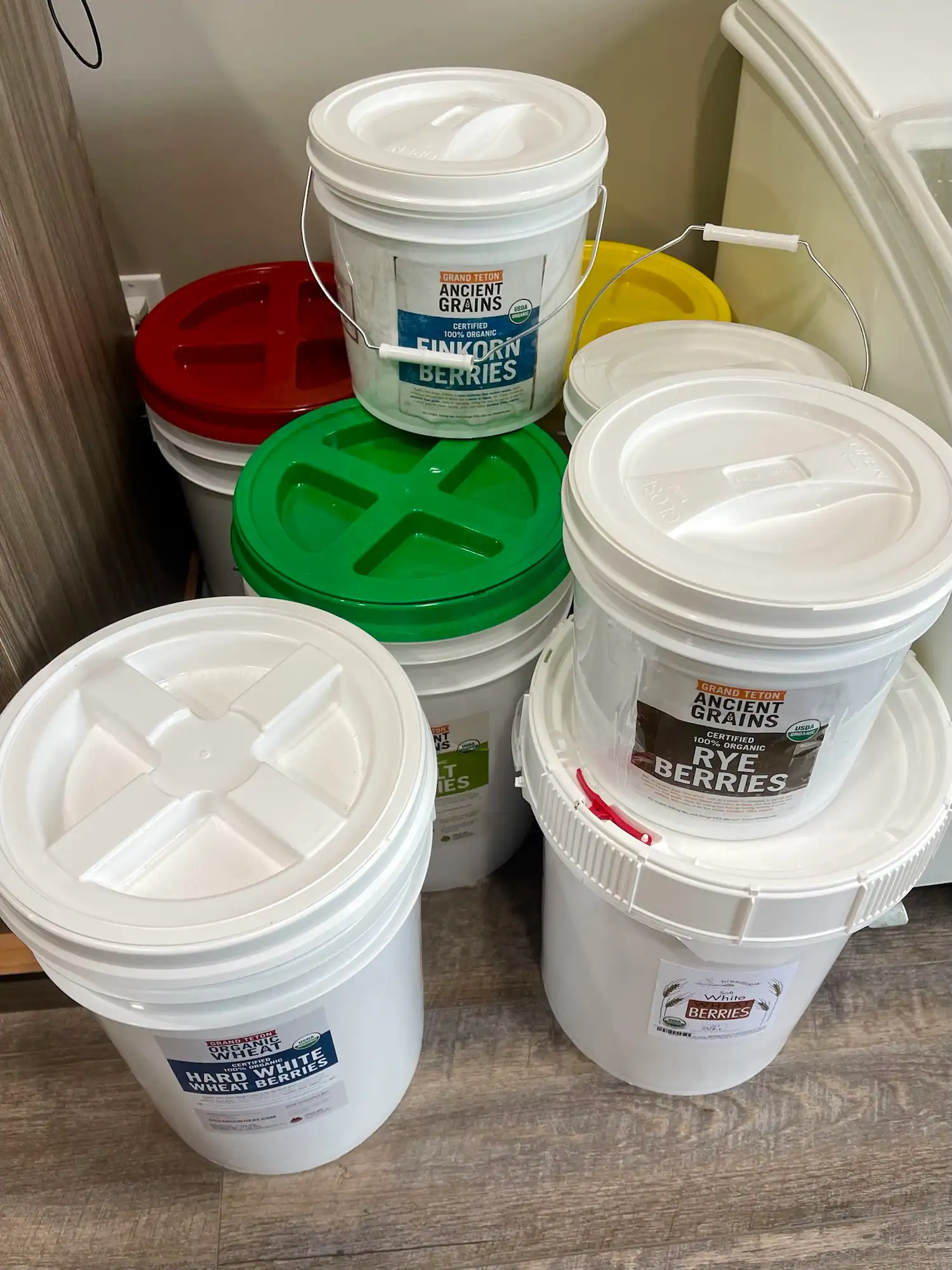
I buy most of my wheat berries from Ancient Grains. There are only a few that they do not carry and I will list where I buy those next. Ancient Grains offers free shipping and excellent quality. You can buy smaller portions all the way up to large buckets. They do offer free shipping with the buckets or a certain order with the smaller bags.

Breadtopia

I buy my soft wheat berries as well as my durum wheat berries from Breadtopia since I can’t get those at Ancient Grains. I do pay shipping when I order from them.

Here are a few addition options:

Azure standard

This is an organic food company that you place your order on line and they ship the orders in a refrigerated semi. Everyone picks up their orders at a drop ship location near them. I have not ordered wheat berries from them, but they do offer them. The timing of when I needed them has never been right with my monthly Azure orders.

Breadbeckers

This is Sue Becker’s retail shop located in Woodstock GA. They also have a co-op and ship online.

Wheat Berry Storage:

You will want to store your wheat berries so that bugs and moisture can’t get into them.

Long term storage:

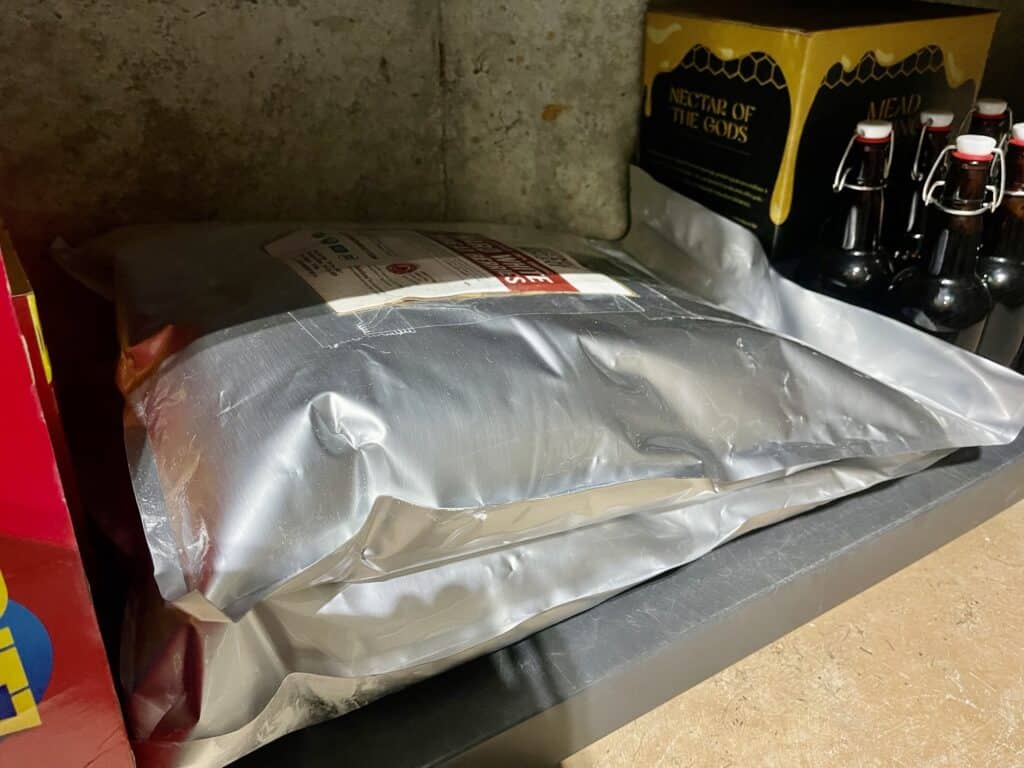
I use Mylar bags with oxygen absorbing packets to store wheat berries for a longer period of time. I store these in my basement food pantry/cellar which we call T-Mart (Thornburg Mart😜).

Larger quantities I want to access:

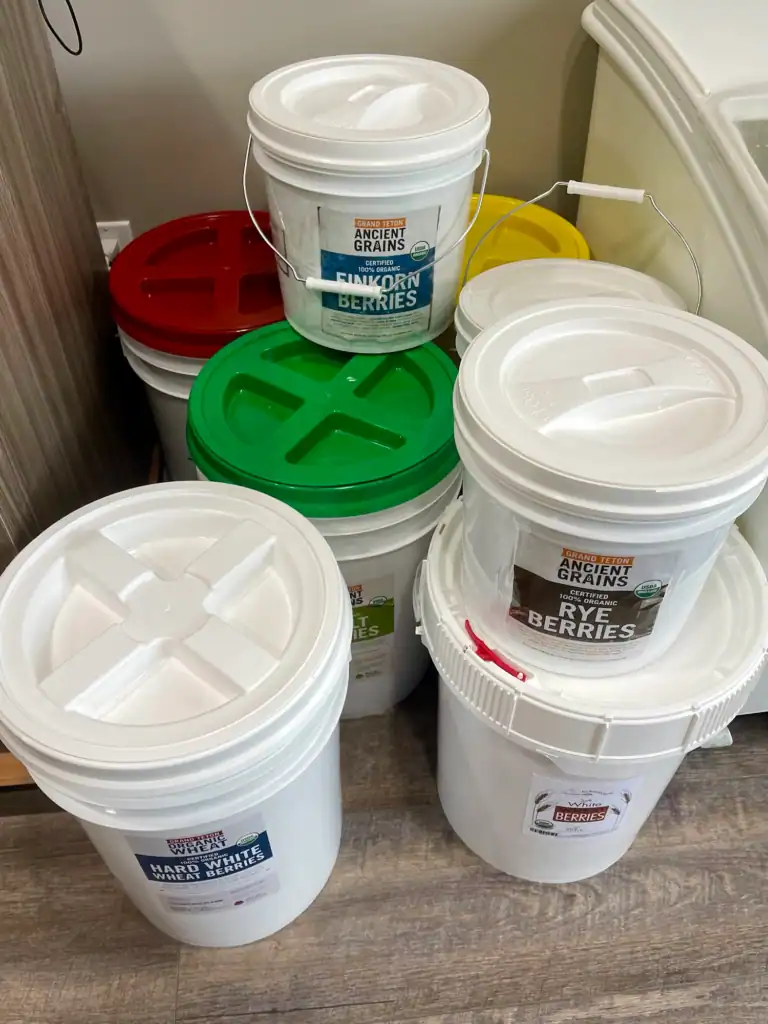
For the wheat berries I use a lot of, I have 5-7 gallon buckets with gamma lids so that I can unscrew the lid easily for access. For the wheat berries I don’t use as much, I currently have small 2 gallon buckets with gamma lids.

What I’m using from:

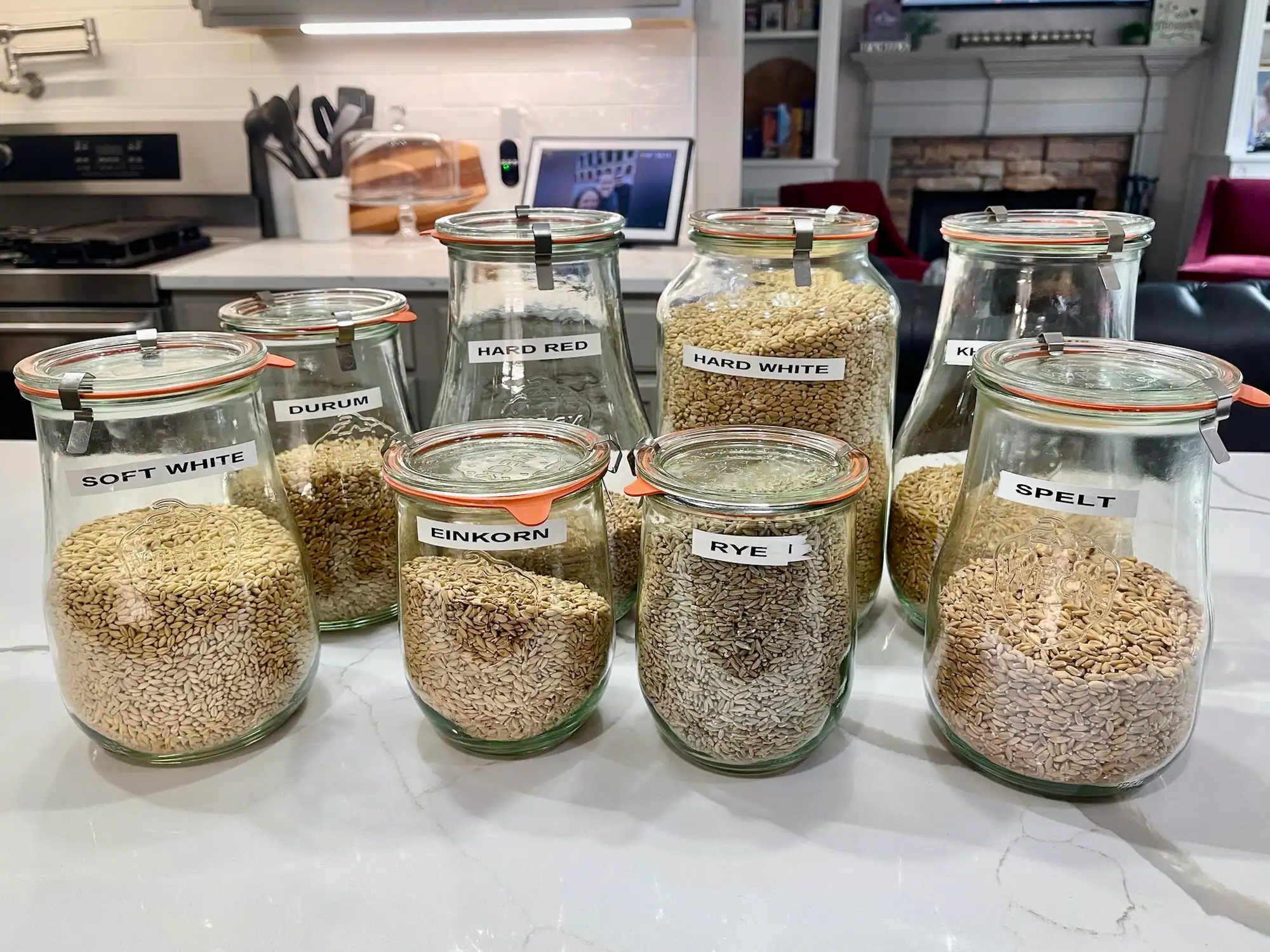
When I started milling my own flour, I would go to my buckets to get what I needed. But that meant taking my scale down as well and it wasn’t ideal for me. I ended up keeping smaller glass Weck jars of each wheat berry in my pantry for convenience and seems to really work for me. When I get low, I just go down and fill them up.

I hope this starter guide was helpful. If you have any questions, you can send me an email or find us on social media.

Happy milling!

Fresh Milled Sourdough English Muffins

January 27, 2026 by Erika

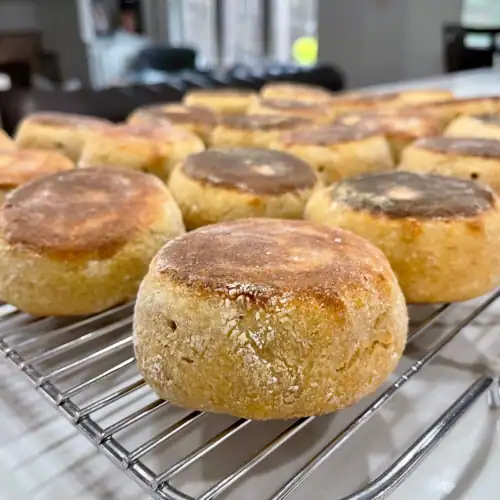
fresh milled sourdough english muffins

Fresh Milled Sourdough English Muffins

Erika
These english muffins are made with 100% fresh milled flour and naturally fermented with sourdough starter. They are full of a rich almost nutty flavor you just can't get from store-bought. They are perfect for egg sandwiches, slathered in butter or honey, or toasted with your favorite jam or jelly. These are a staple in our household.
Print Recipe Pin Recipe
Course Breakfast
Cuisine Sourdough
Servings 20 English Muffins

Equipment

  • Mixer (I use a Bosch Universal Plus)
  • Straight Sided Container for Bulk Fermenting (I use a Cambro 6 qt for this recipe)
  • Large Skillet with a lid
  • 1-2 Baking Cookie Sheets
  • 1-2 Silicone Mats or parchment paper
  • Instant Read Digital Meat Thermometer to check the internal temperature of the english muffins for doneness
  • 1-2 Kitchen Towels (to cover dough balls on second rise)

Ingredients
  

  • 600 g Hard White Wheat Berries
  • 600 g Khorasan Wheat Berries
  • 760 g milk
  • 300 g Sourdough Discard
  • 80 g Honey
  • 22 g Salt
  • 3 eggs
  • 4 tablespoon avocado oil (This is approximate. I just drizzle it into the pan)
  • 50-100 g Additional milled wheat berries for dusting dough balls the following morning

Instructions
 

  • Mill your wheat berries
    Nutrimill Harvest Flour Mill
  • Add 600g of Hard white fresh milled flour, 600g of Khorasan fresh milled flour, milk, eggs, and honey into mixer. Mix until combined. Cover and let autolyze for 30 minutes.
  • After autolyze period is over, add sourdough starter and salt to mixer. Mix until combined. Knead until it is smooth, stretchy, and you can gently pull it out and get a bit of a windowpane.
  • Transfer dough from the mixer into a straight sided container like a 6 qt Cambro so you can see the percentage of rise easily. Allow to bulk ferment until it rises about 70%. In the 6 qt Cambro, i let it rise till it is about at the 3.5 qt line.
  • Refrigerated dough overnight in a sealed container. If you used a Cambro to bulk ferment, you can just put it in the refrigerator.
  • In the morning, take the dough out of the refrigerator. Mill a small amount of flour to roll the english muffins in. Use a scale to make a 109-110g dough ball then rolling it in your bowl of fresh milled flour to coat. Set the dough ball on a cookie sheet with parchment or a silicone mat. Continue to ball and roll the english muffins in flour until you have approximately 22 dough balls additional additional avocado oil to the pan as needed. Cover the dough balls and let them double in size which will take another 2 hours or so depending on your house temperature.
  • Once the english muffins have doubled in size, heat up a large skillet with a lid on the stovetop on medium low drizzling avocado oil in the pan to prevent them from sticking. Preheat the oven to 375 degrees Fahrenheit.
  • Place as many english muffins in the pan that will fit, but you can still easily flip them. Cook 4 minutes covered then flip them over and cook an additional 4 minutes covered. Transfer the english muffins to a cookie sheet and finish cooking them in the oven at 375 degrees Fahrenheit. This usually takes me 4-6 minutes until they reach an internal temperature of 208-210 degrees Fahrenheit. Transfer to a cooling rack and continue the same procedure till all of the english muffins are baked.
  • Enjoy!
    fresh milled sourdough english muffins

Notes

These can be stored in the refrigerator until you are ready to toast them.  I tend to divide them into several freezer bags and store one in the refrigerator and the others in the freezer till we need them.
When you are ready to toast them, just use a fork to split them open.
Keyword Fresh Milled Flour, English Muffins, Sourdough
Tried this recipe?Let us know how it was!
Just like that Our Rooted Mess was born!
January 25, 2026 by Erika

I recently posted something to my personal page about how I started milling our own flour and we made a lasagna from scratch extruding the noodles with our new Phillips 7000 pasta maker. Plus, I have been sharing pictures of the bread that I have made in the fresh milled flour groups and immediately had people asking for recipes. A few comments got me thinking. This idea turned into a full fledge company with a Tiktok, Instagram, Facebook, and Twitter pages yesterday!

I use to have a commercial bakery called Baked Addictions when we lived in Texas. When we relocated to Georgia in September 2019 I fully intended to reopen it, however, with COVID it just didn’t seem to be a good idea. So, I sold all of the equipment that was just sitting in storage. I make all of our bread and goodies from scratch so baking and this type of thing isn’t new. This is just a new way to share it.

So follow along while I share the adventures of the wild Thornburgs making things from scratch using fresh milled flour!

Our Socials:

Subscribe on Youtube:

Welcome!

Learn more about The Thornburgs and how Our Rooted Mess came to be!

More about me

Popular

  • Oatmeal Scotchie Cookies
    Fresh-Milled Flour Oatmeal Scotchies with Fresh-Flaked Oats
  • Moist Chocolate Cherry Cake made with Fresh-Milled Flour
    Moist, Fudgy, Divine Chocolate Cherry Cake
  • sourdough discard brownies
    The Best Gooey Sourdough Discard Brownie Recipe
  • Souedough soft sandwich bread recipe
    Super Soft Tangzhong Sourdough Sandwich Loaf Recipe

Who doesn’t love a warm, gooey chocolate chip cookie! This chocolate chip cookie recipe is made with fresh-milled flour and organic cane sugar and produces a delicious chocolate chip cookie! If you are struggling with your chocolate chip cookies being flat since starting fresh-milled flour then you need to head to my site and print this recipe to try! #chocolatechipcookierecipe #freshmilledflour #freshmilledflourchocolatechipcookie #chocolatechipcookie
Who doesn’t love a warm, gooey chocolate chip cookie! This chocolate chip cookie recipe is made with
Composting in preparation for the new garden! So basically making dirt from scratch like everything else we do. #composting #gardeningtiktok
Composting in preparation for the new garden! So basically making dirt from scratch like everything
Fresh-milled Cream Of Wheat and the beautiful thing is you can make it exactly how you like it! #freshmilledflour #creamofwheatrecipes #creamofwheatlovers #creamofwheat
Fresh-milled Cream Of Wheat and the beautiful thing is you can make it exactly how you like it!
Just another day in the Thornburg’s house. You have to be filmed eating your pancakes. #filmingourlives #outtakes
Just another day in the Thornburg’s house
Will the garden we are starting survive? Guess it’s a good thing we decided to just use a bed we already have and see how it goes. #startingagarden #beginnergardener #blackthumbgardener
Will the garden we are starting survive? Guess it’s a good thing we decided to just use a bed we
Fresh-Milled Sourdough Discard Pancakes so fluffy and satisfying! 🤤 #sourdoughdiscardrecipe #freshmilledflour #sourdoughrecipe #pancakesrecipe
Fresh-Milled Sourdough Discard Pancakes so fluffy and satisfying! 🤤 #sourdoughdiscardrecipe
We have sprouts from the seeds we planted! Getting this new garden going inside while it’s still cold. #gardeningtiktok #startingseeds
We have sprouts from the seeds we planted! Getting this new garden going inside while it’s still
We bought a rotatiller for the new garden! This should make it easier! #gardeningtiktok #startingagarden #beginnergardener
We bought a rotatiller for the new garden! This should make it easier! #gardeningtiktok
We are starting a garden here in Georgia. We are making due with what we have instead of investing a ton of money into raised beds. Will it work? Follow along to see. #gardeningtiktok #startingagarden
We are starting a garden here in Georgia
Subscribe

Footer

↑ back to top

About

  • Privacy Policy
  • Disclaimer
  • Terms & Conditions
  • Accessibility Policy

Contact

[email protected]

or follow us on social media!

At no cost to you, we may earn from qualified purchase made through affiliate links on our website.

Copyright © 2026 Our Rooted Mess

×

Log In

Forgot Password?

Not registered yet? Create an Account