Just starting or considering getting into fresh-milled flour?
Here is a detailed list of all of the things that I wish I had known starting out as a beginner in Fresh-Milled flour.
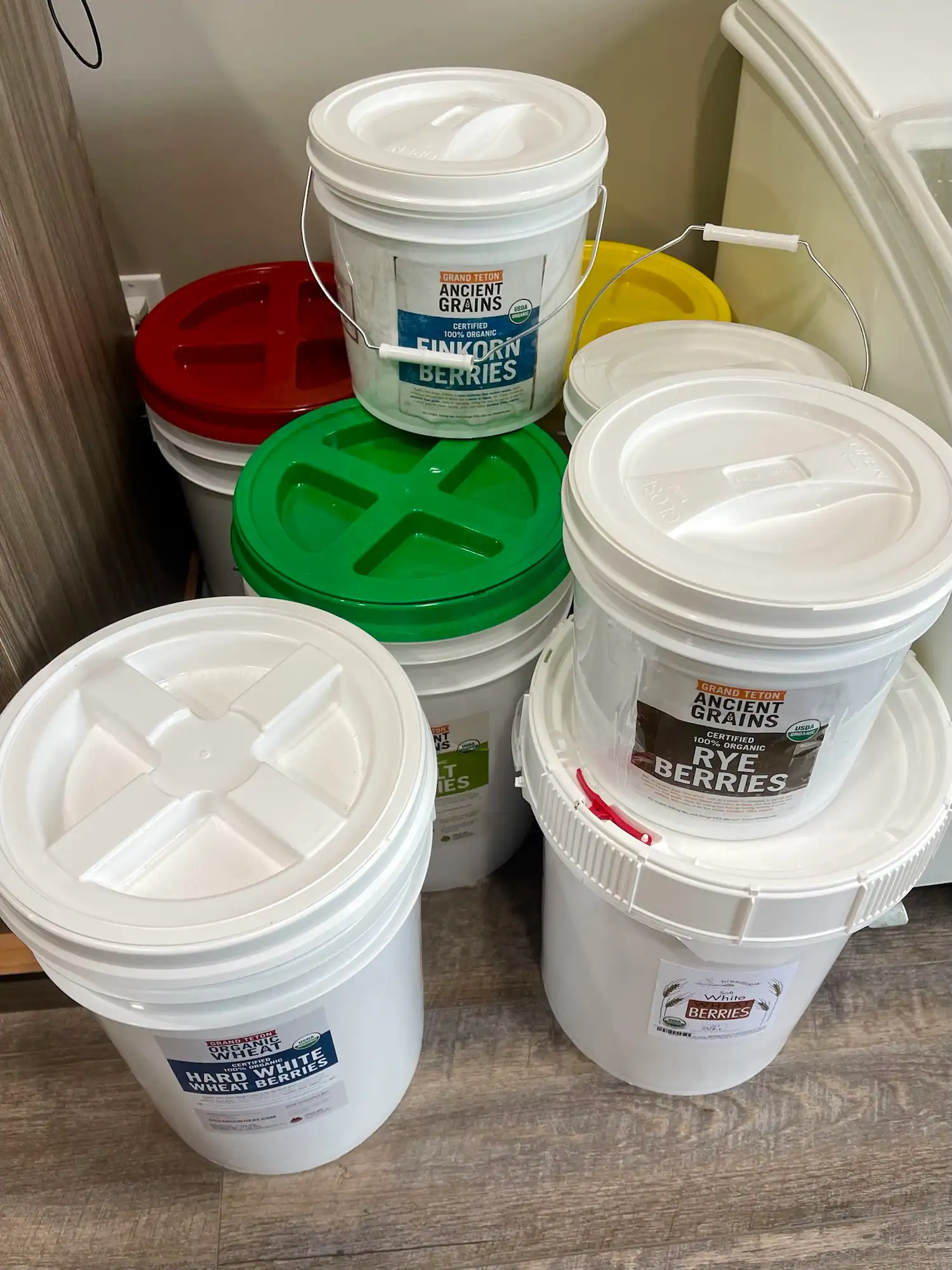
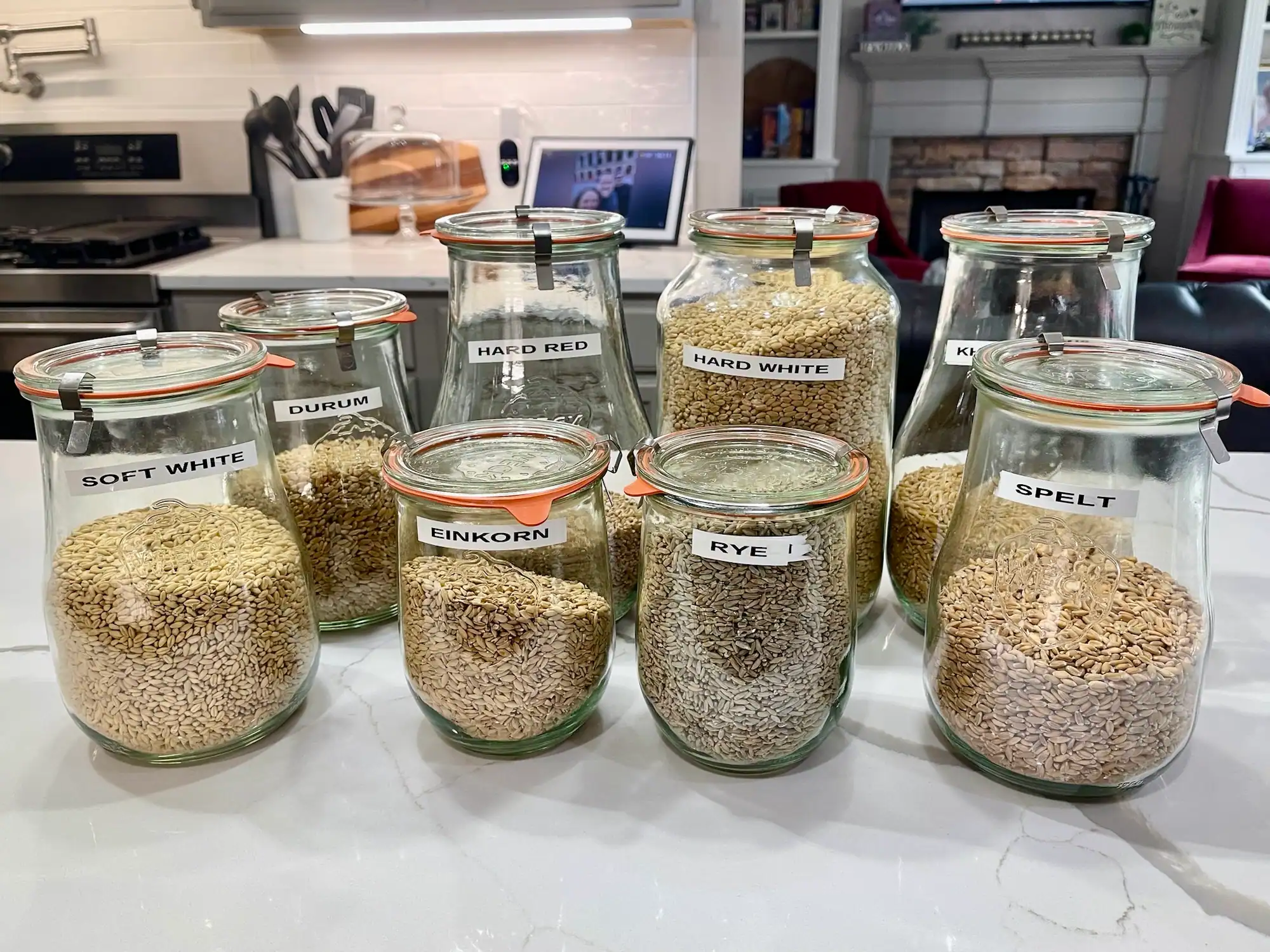
- When purchasing your wheat berries, a lot of people get hard red wheat berries as their first one and don’t like the bread it produces. Honestly, I never make breads with 100% hard red. It can produce a more dense, heavy bread. The wheat berry that we go through the most in our household is by far hard white. I use it in a lot of my blends. So, if you could only get one wheat berry I would opt for hard white. However, keep in mind that some people think it can be a little bland on its own; therefore, I would suggest a blend of 70% hard white and 30% Khorasan or spelt.
- You don’t need to disregard all of your old recipes and only make fresh-milled flour recipes. Experiment with recipes you love! Of course, I have recipes on this site that I have tested and proven to be successful. If experimenting scares you, try some of ours!
- Fresh-milled flour needs more hydration than store bought flour. An autolyse is something I never did prior to starting fresh-milled flour, but now I feel it is absolutely necessary. What is an autolyse? It’s a period of time at the beginning of your recipe where you let the flour and water hydrate before adding the yeast/sourdough and salt. It initiates gluten development and helps your overall bread structure.
- If you want to use your existing bread recipes, you may have to increase the hydration percentage. For example, I went from 75% with store flour to 80-85% with FMF.
- When I was doing sourdough with store bought flour, I was mixing by hand and doing all of my stretch and folds by hand. I found transitioning to fresh-milled flour, that the mixer was my friend and just made it easier. I believe that fresh-milled flour recipes not only need additional hydration and a longer time to absorb the water, but additional up front gluten development helps greatly.
- If you join fresh-milled flour Facebook groups, you will quickly see that so many people use the Bosch Universal Plus or Ankarsrum mixers rather than a Kitchen Aid. I have had a Kitchen aid for 30+ years and never imagined getting another mixer. With my Kitchen aid getting old and needing some work, I was on the look out for a new one. I happened to get a deal on a Bosch Universal Plus Mixer figuring that if I hated it I could just sell it. Well, it made me realize that my Kitchen Aid SUCKS at bread doughs. It use to take my Kitchen Aid 25+ minutes to knead bread dough to somewhat of a windowpane. Then I got the Bosch and it could produce a beautiful windowpane in just 7-8 minutes. That windowpane was no where near comparable to what my Kitchen Aid produced. The first loaf of sandwich bread I made with the Bosch was no longer crumbly. Which made me conclude that the gluten development was one of the keys in making Fresh-Milled Flour loaves. So, if you are in the market for a mixer with Fresh-Milled Flour breads the Bosch Universal Plus is a beast! I still regularly use my Kitchen Aid for other things though.
- It might be tempting to ease in by using 25-50% fresh-milled flour in your recipes. Feel free to do that. I in fact did, but quickly realized that I should just jump right in. This is completely up to you. I would highly recommend that you make your breads with 100% fresh-milled flour to get all of the benefits though. Don’t be scared! You’ll get it down.
- If you already do sourdough, don’t be afraid to continue to feed your starter store bought flour to use it up, but make all of your bread items with 100% fresh-milled flour.
- When making cookies or muffins, a short time in the refrigerator or even putting cookie dough balls in the freezer is helpful. This allows the flour a little additional time to absorb the liquids.
- It may sound crazy, but you will probably find yourself snubbing your nose at store bought flour items within a short period of time and just not find them appealing anymore.