
Do your sourdough loaves ovenproof? Are you letting your dough double then doing an overnight cold proof? That could very well be the issue that is causing you problems.
Using an overnight cold proof and allowing your dough to rise until it is till doubled will often result in overproofed bread. Let me explain a little further.
By the time you form your loaves and put them in the fridge, it takes some time for them to cool down to fridge temperature allowing the dough to continue to rise and often overproof. The warmer your dough is the more of an issue this can be.
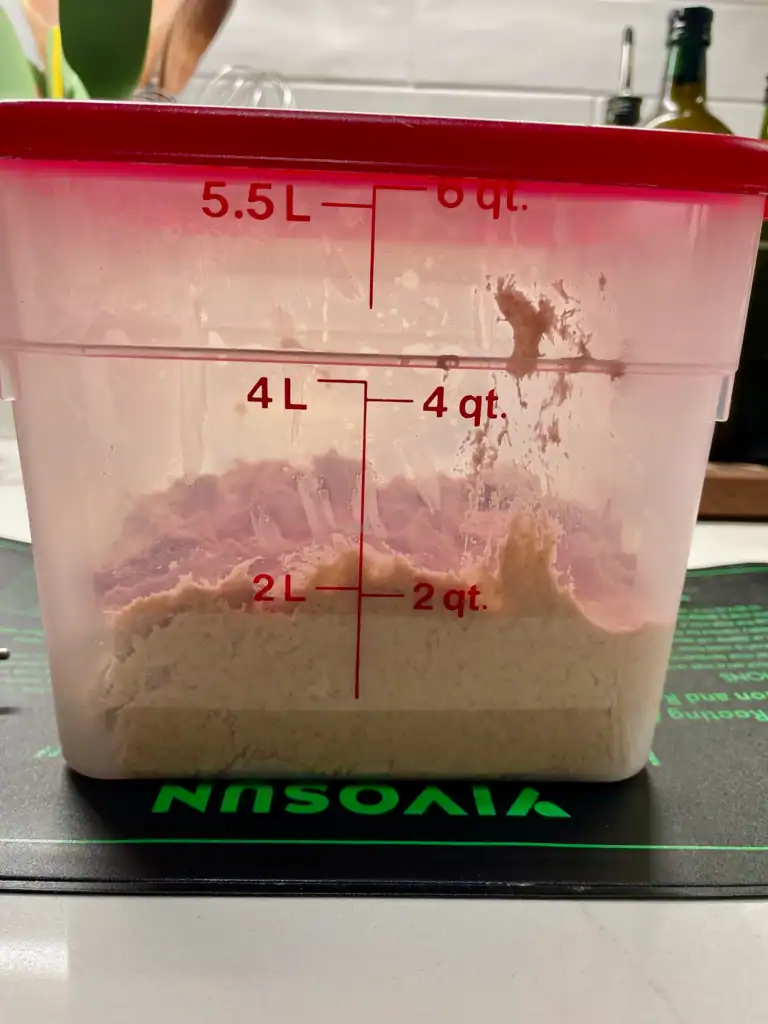
To combat this, the best thing to do is account for the dough temperature. Using a straight sided cambro with markings on the side note your starting point. Then take the temperature of the dough and compare that temperature to The Sourdough Journey chart to see what percentage rise you should aim for. I will often use a wipeable marker and mark my aim, but you may have to check the temperature again if your dough warms up or cools off a lot. Completely ignore the time part of the chart though because every dough is different and yours may go faster or take longer. I only look at the percentage rise and watch for the dough to achieve that. You will also notice as it approaches that rise there will be more and more bubbles and the bubbles will be all over the sides through the entire dough.
For example, if your dough is at the 2L mark and the chart says you should aim for a 40% rise, you would start forming your loaves when your dough reaches the 2.8L mark. It sounds more complicated than it is, but it will save you so many headaches.
Your dough temperature will be relatively constant and may change from season to season, but once you use the chart a few times you’ll get a feel for when you need to form your loaves. If it is really cold in your house, you can get a seedling mat relatively inexpensively to put under your dough to keep it warm.
Save a copy of this chart to your phone or print it out to have in your kitchen. You’ll thank me when your loaves are consistently successful.