Have you recently started Sourdough or you have been failing miserably at it? Most of the times a couple of small tweaks can lead you on the road to success. One of the most common mistakes is feeding your starter incorrectly. Here are a few tips that may help you.
- Not discarding from your sourdough starter before you feed – I know it seems like you are throwing away your hard work, but in the first 7-10 days you won’t be able to use that discard because of the bad bacteria in the starter. Once the good bacteria wins, then you will be able to use that discard in Sourdough Discard Recipes. For now, chuck in the trash and go on with it. If you don’t discard, you would have to feed your starter so much more flour and water that it just wouldn’t be cost effective. Even after your starter is established, you would be surprised how little discard you need to keep in order to bake all of the goodies you want.
- Going along with the not feeding your starter enough – Get a kitchen scale so you can accurately weigh your ingredients. Flour and water don’t weigh the same so it’s not as easy as feeding 1 cup of flour and 1 cup of water. That wouldn’t lead to an equal feeding. I have a couple of great kitchen scales in my Amazon Storefront if you want to check them out.
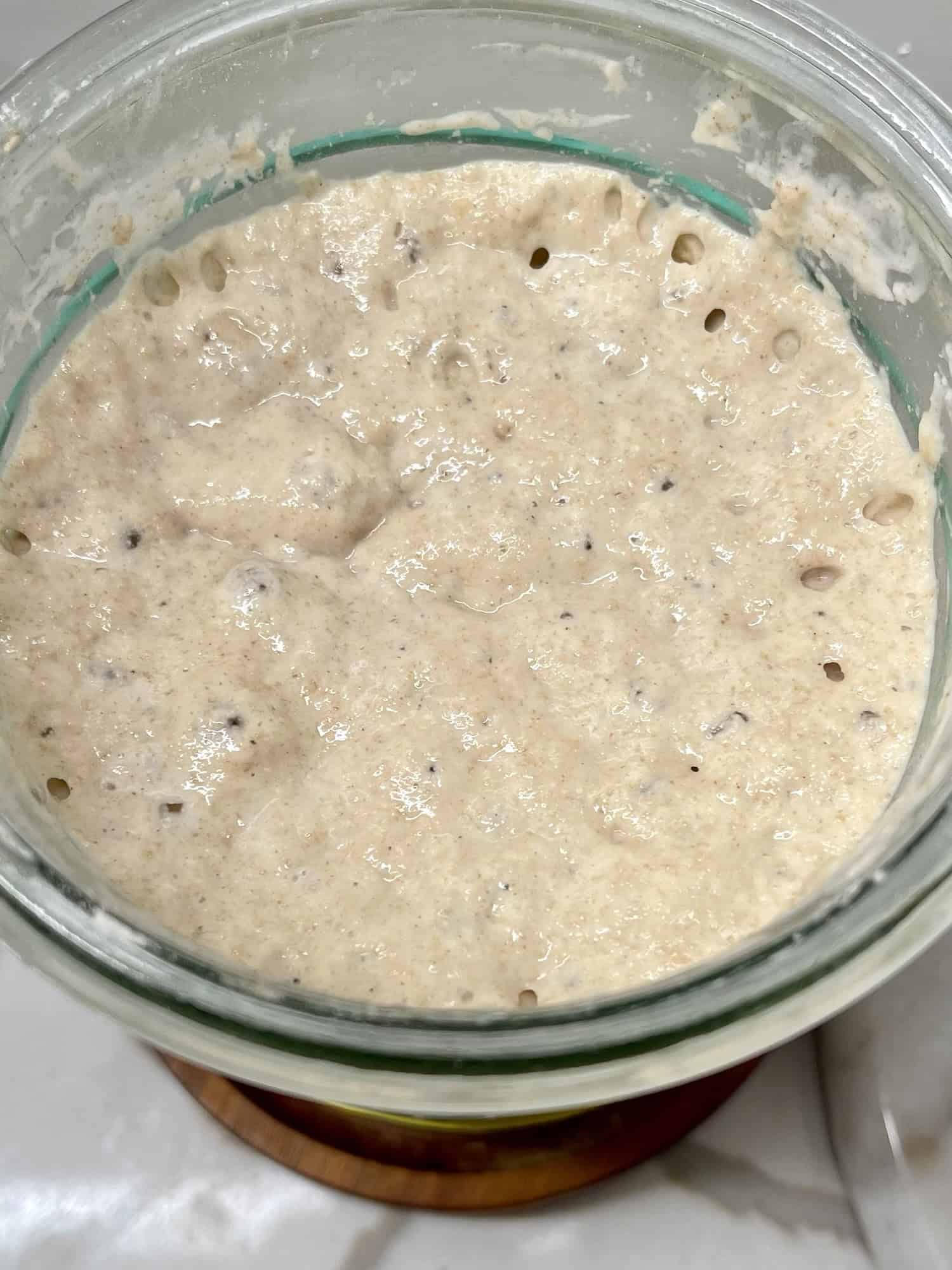
- Feeding your sourdough starter too soon – I hear a lot of sourdough bakers say they bake with or feed when their starter doubles. That’s not necessarily correct. In fact, feeding your starter too soon can actually weaken it. You will want to wait until your sourdough starter has stopped rising and is at it’s peak. How do you tell if it’s still rising? The starter will be rounded off at the top when it is still rising plus there will not be bubbles on the surface or not many bubbles. Once the starter has reached it’s peak, you will see the entire surface covered in bubbles and craters from where the bubbles have collapsed. Plus, the top will be flattened out rather than being rounded of puffy looking.
- Feeding your sourdough starter the wrong things – Does your water have chlorine in it? Are you using unbleached flour? The chlorine/bleach in those things will kill off your good bacteria which is what will eventually rise your dough and make beautiful bread. So, you want to use only unbleached or fresh-milled flour plus chlorine free water. I use a bottled spring water for all of my breads and sourdough just to be safe.
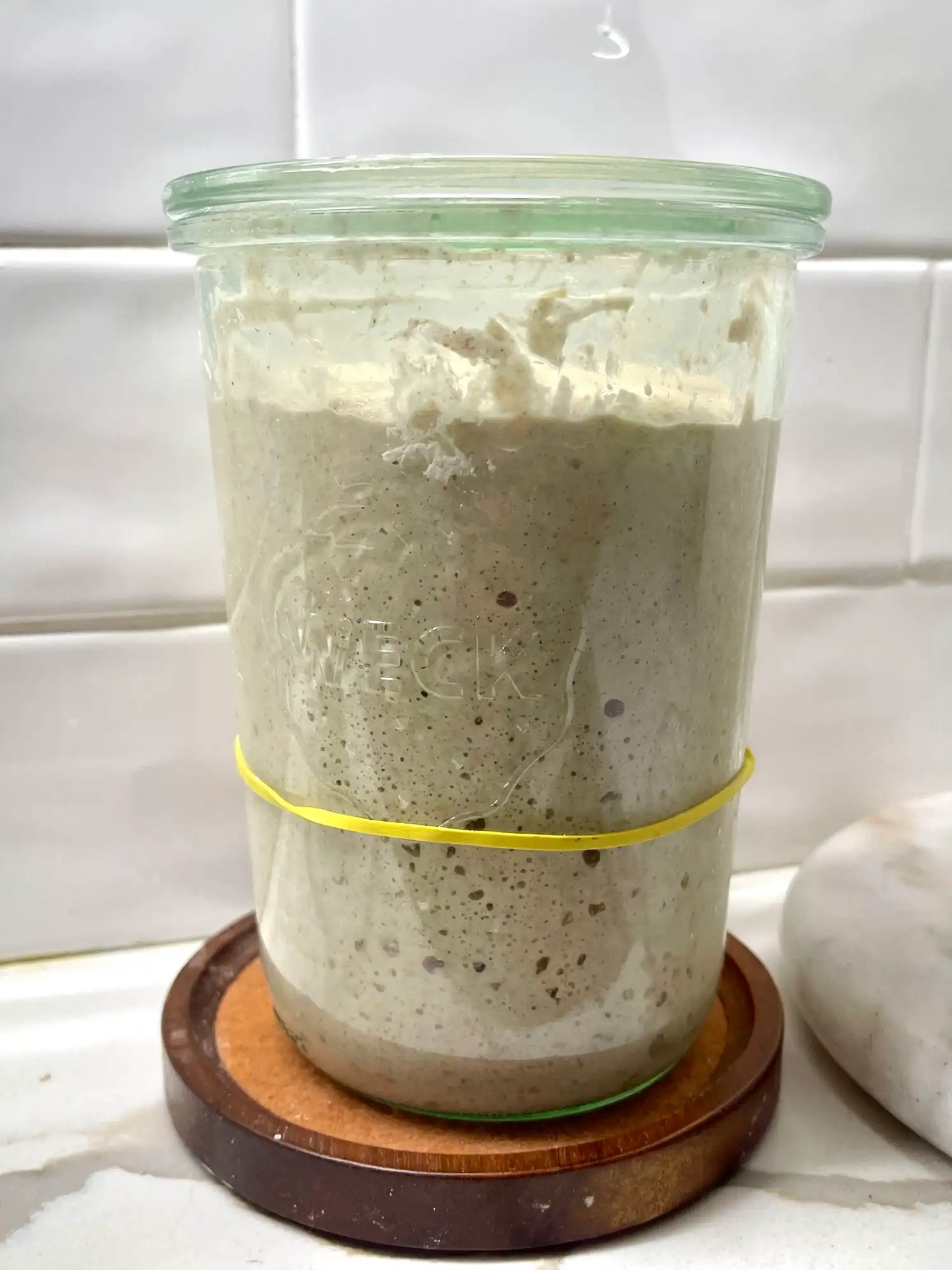
This is my starter almost at peak, but still rising:
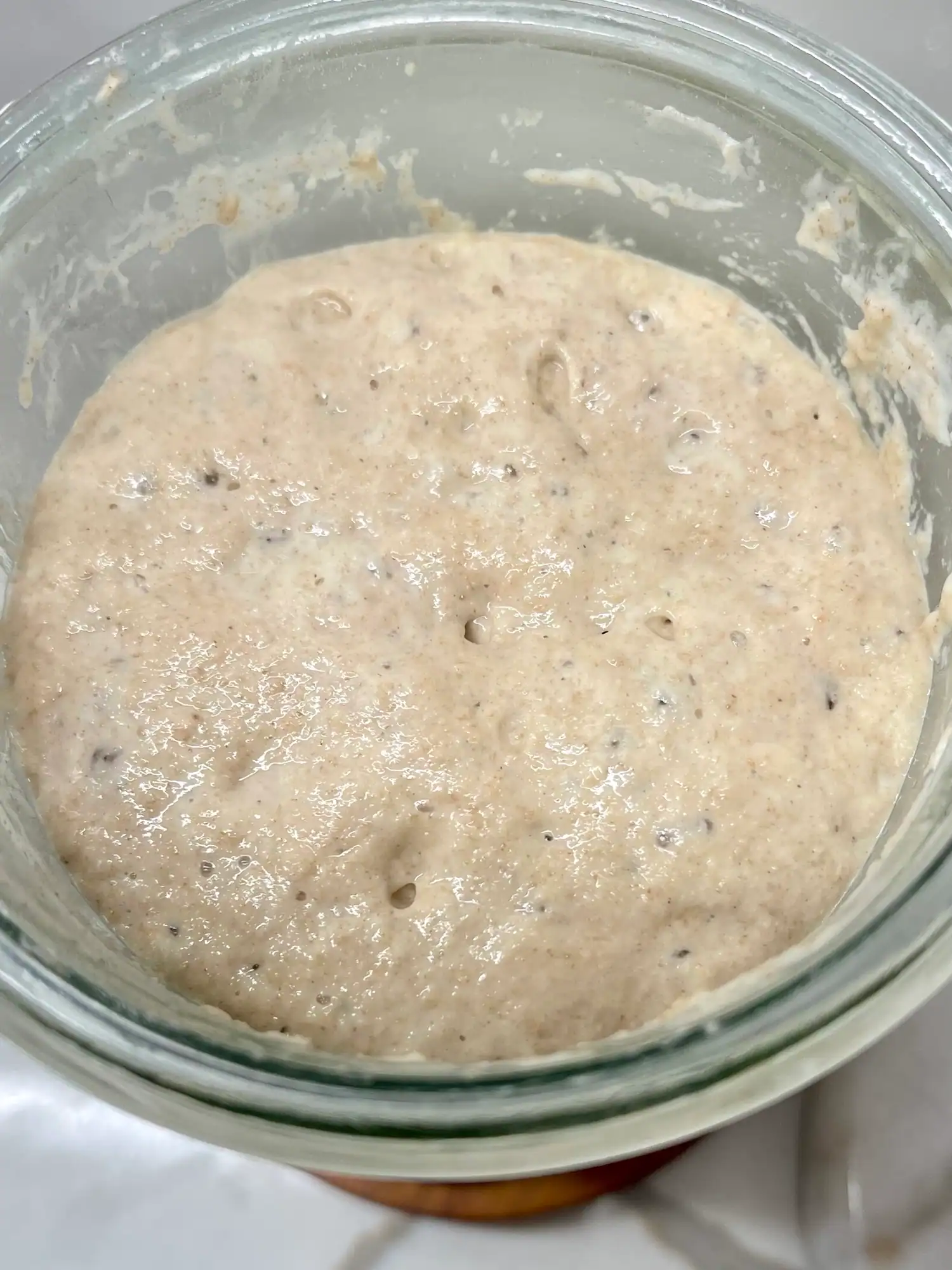
This is my sourdough starter at peak:
If you are unsure if your starter has peaked:
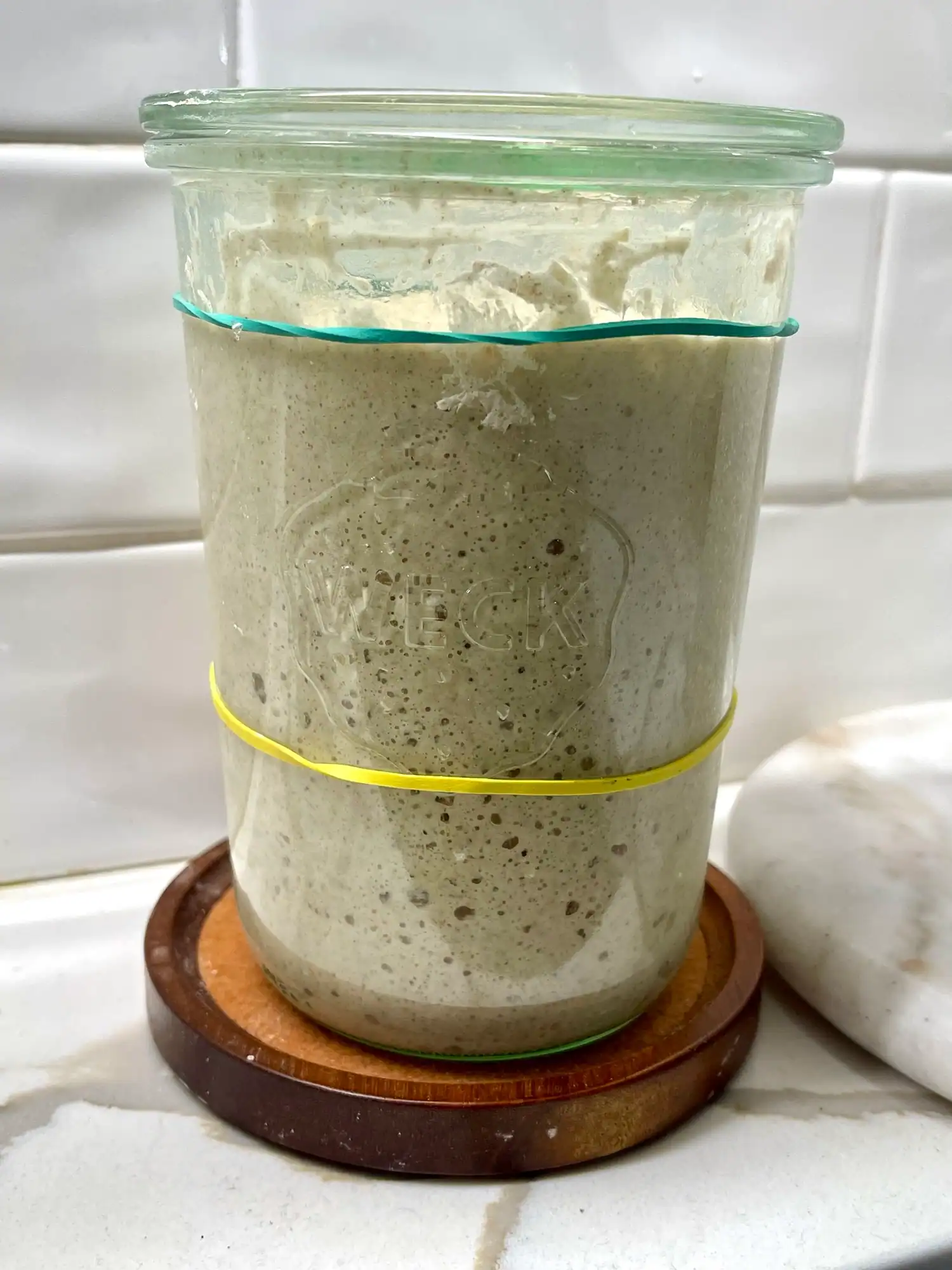
- Add a rubber band after you feed your starter as a start point
- Add a rubber band around the top line if you believe your starter has peaked and wait a little while. If your starter goes above the top rubber band, it is still rising. If it stays the same, you are probably at peak and its’ time to use it or discard and feed it. If it drops down below the rubber band, your starter is beginning to fall so now is definitely a good time to feed it or use it. You really don’t want to wait till it has completely collapsed to discard and feed, but feeding it too later is better than feeding it too early.
I hope these small tips were helpful and lead you to a successful sourdough journey! Comment if you have any questions and I would be happy to answer them!
Final note on starting a starter from scratch:
If you are in the process of doing some research and haven’t started your sourdough journey yet, I want to supply you with a tool that helped me when I started. I would highly recommend that if you are wanting to start a sourdough starter, or struggling in the beginning stages of a sourdough starter, go print out the How to Create A New Starter by Tom Cucuzza The Sourdough Journey guide. This is full of valuable information.