There are so many health benefits to milling your own flour. I won’t bore you with all of the details since you can easily go read about it. To simply put it, when they process store flour they remove the bran (outer layer/fiber) and germ (inner core/nutrients) from the wheat kernel, leaving only the starchy endosperm. From my understanding, they did this to increase shelf life of store bought flour. The flour you buy in the grocery store has been milled months before the stores or you even see it. Wheat berries on the other hand have an incredibly long shelf life. I have even read that ancient grains were found in the Roman tombs.
Milling your own flour you retain a great deal of vitamins that are just not in store bought flour. The only down side is that once the grains are milled with the bran and germ in tact, it has a limited shelf life. That’s why home millers like myself typically just mill what they need when they need it. It sounds like it would be terribly inconvenient; however, it’s really not as bad as it sounds.
When we started milling our own flour, the increase in fiber was so much that when I made chocolate chip cookies with 100% fresh milled flour, we had a considerable amount of gas. 😂. So much so that our household has since called chocolate chip cookies “Fart Cookies”. 😂😂😂
If milling your own flour is something you are considering, here are a few basics that will help you start your journey.
Buying a Mill:
There are two types of mills to consider: Impact mills or stone mills.
Impact mills – These type of mills have two stainless steel plates that rub together to mill the flour. They are typically less expensive but will only mill your flour very finely. That can be a great thing starting out; however, it can be limiting. Popular impact mills include Wondermill and the Nutrimill Classic.
Stone mills – These type of mills have two stone plates that grind together to create the flour. With this type of mill you control by a knob or setting how fine or coarse your flour is. This gives you a wide variety of options which is the reason I chose to go this route. This is how flour was milled by hand in old times so I guess I decided to go back in time but with electric doing the work. Popular stone mills include Nutrimill Harvest, Komo, and the Mockmill.
What mill I have:
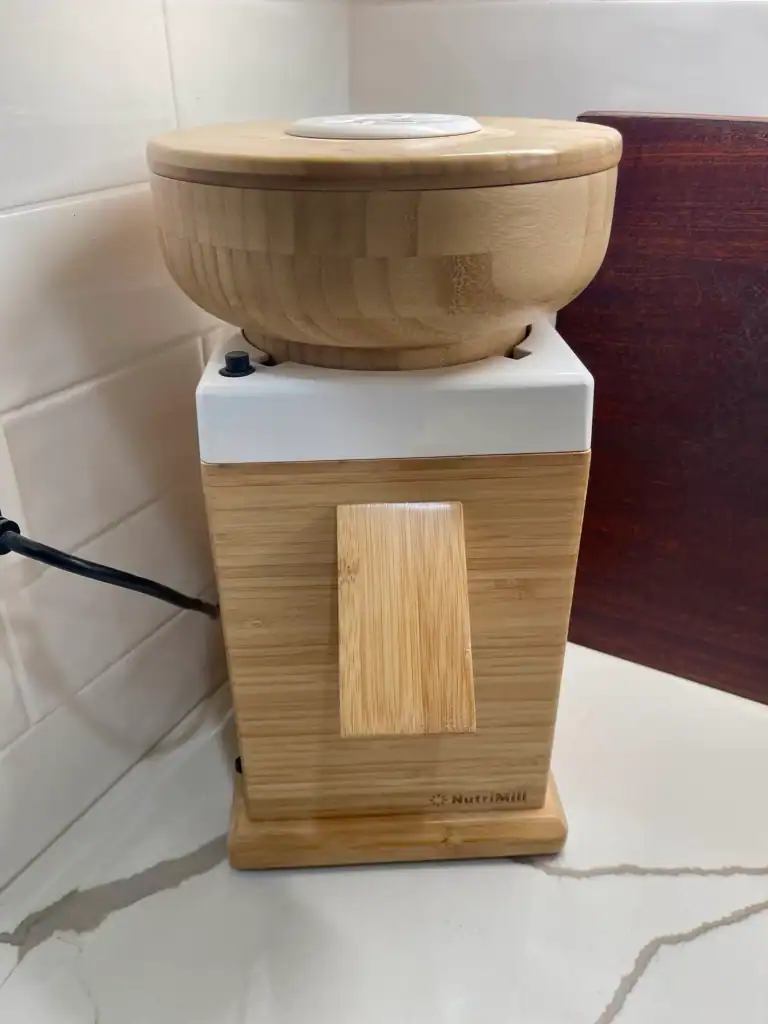
I have Nutrimill Harvest which is a a stone mill. It gives me control over how fine or coarse the flour is plus it’s beautiful sitting on my counter.
Once you have purchased your grain mill, next you will need to purchase wheat berries. If you thought selecting a grain mill was difficult, the options in wheat berries can be more overwhelming in my opinion.
Here are the basics you need to know about wheat berries:
Hard wheat:
These are what you will need to bake bread items that need to develop gluten.
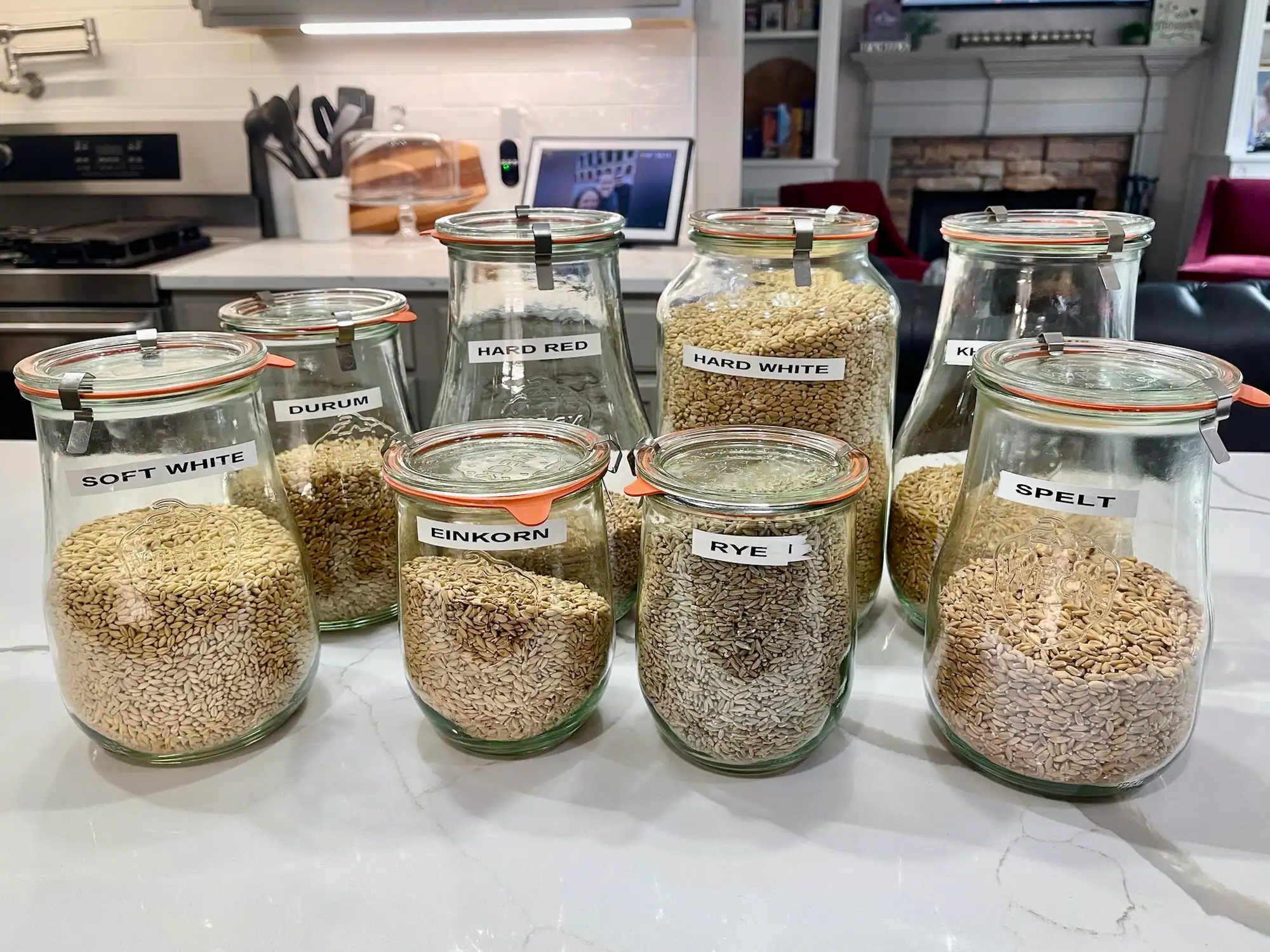
Hard Red – These wheat berries are more what you think of when you think of wheat bread. They produce a hardy bread that tends to more dense than store bought bread.
Hard White – These wheat berries are more mild than Hard Red and produce a milder flavored bread. These tend to produce lighter colored baked goods. I tend to make bread with these wheat berries and a quarter or one third of an ancient grain.
Soft Wheat:
Soft white – These are the wheat berries you can use in cookies & muffins that do not require gluten development. However, I tend to mix these with other wheat berries.
Ancient Grains: From my understanding these tend to be easier on the tummy especially for people who are slightly gluten sensitive.
Khorasan/Kamut – These ancient grains are a large, healthy, and versatile grain from Mesopotamia. They have a buttery almost nutty flavor. I make my sandwich bread with a portion of Khorasan. You will often see people call these Kamut; however, that is just a brand of Khorasan which is slightly more expensive.
Spelt – These ancient grains are the ancient wheat of the Romans. It is also known as Farro Grande although I hadn’t heard it called that. I love spelt in a lot of things!
Einkorn – This ancient grain is probably the most primitive wheat available and contains a different type of gluten than modern wheat. I haven’t experimented a great deal with Einkorn yet. I do have some and have used them for pancakes. A lot of people use this as their “soft wheat” in muffins, pancakes, and cookies and claim it is easier on their gut.
Emmer – This is the one that I do not have yet. This ancient grain is also known as Farro or Farro Medio, and is the ancient ancestor of modern wheat and a cousin to einkorn.
Other Wheat Berries:
Durum – These wheat berries are ground into what you probably know as semolina flour. This is commonly used in pasta.
Rye – This ancient grain is from grass, used as a cereal for centuries in Central and Eastern Europe, brings unique flavors and colors to foods. I’m sure you have seen rye bread which has a very dark brown appearance. Sourdough starters love rye flour and are often used to start a starter.
Where to buy wheat berries:
I buy most of my wheat berries from Ancient Grains. There are only a few that they do not carry and I will list where I buy those next. Ancient Grains offers free shipping and excellent quality. You can buy smaller portions all the way up to large buckets. They do offer free shipping with the buckets or a certain order with the smaller bags.
I buy my soft wheat berries as well as my durum wheat berries from Breadtopia since I can’t get those at Ancient Grains. I do pay shipping when I order from them.
Here are a few addition options:
This is an organic food company that you place your order on line and they ship the orders in a refrigerated semi. Everyone picks up their orders at a drop ship location near them. I have not ordered wheat berries from them, but they do offer them. The timing of when I needed them has never been right with my monthly Azure orders.
This is Sue Becker’s retail shop located in Woodstock GA. They also have a co-op and ship online.
Wheat Berry Storage:
You will want to store your wheat berries so that bugs and moisture can’t get into them.
Long term storage:
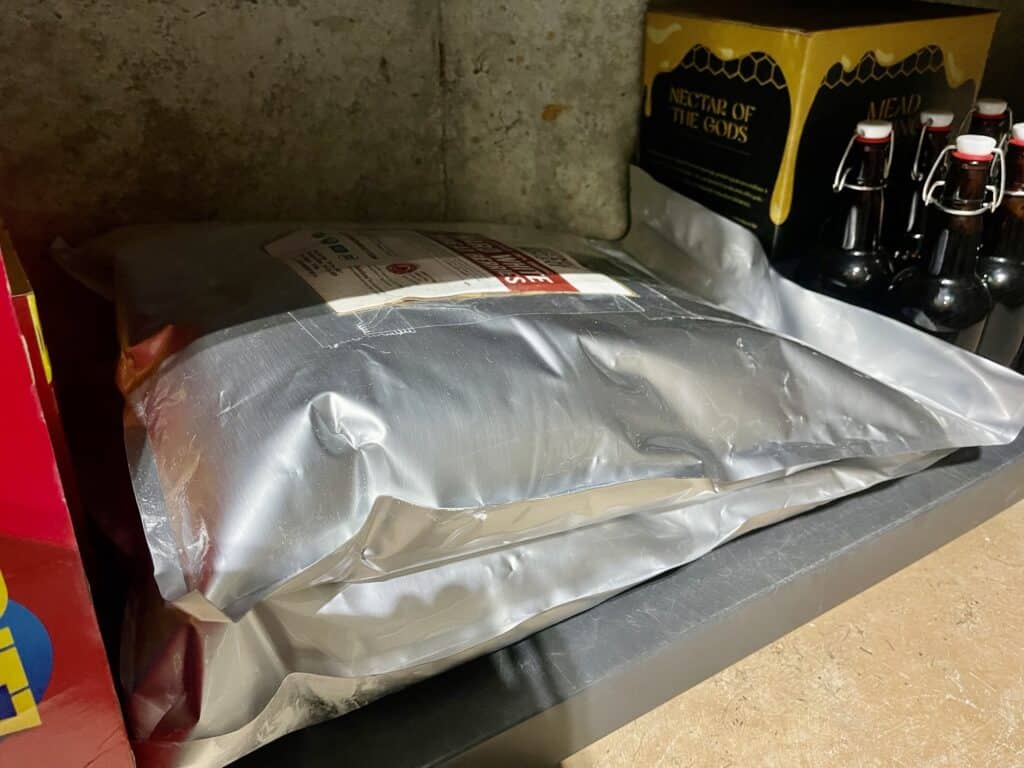
I use Mylar bags with oxygen absorbing packets to store wheat berries for a longer period of time. I store these in my basement food pantry/cellar which we call T-Mart (Thornburg Mart😜).
Larger quantities I want to access:
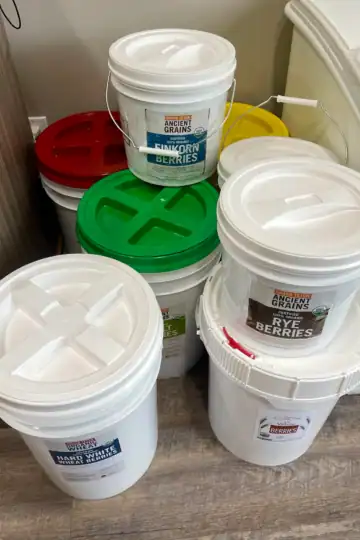
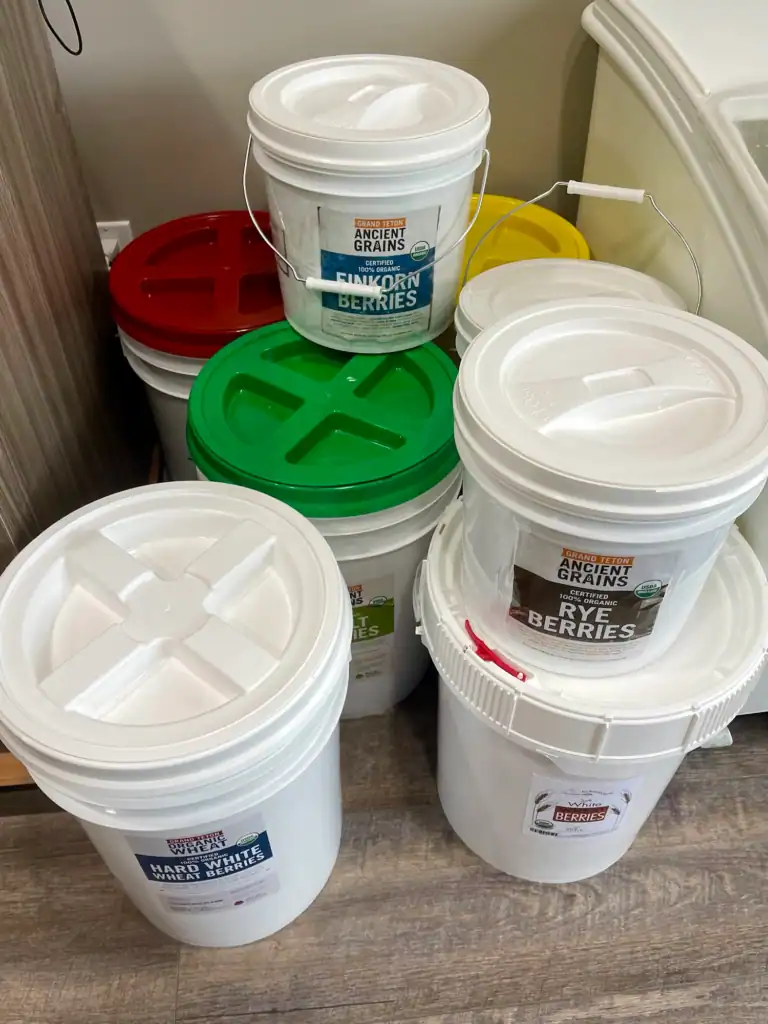
For the wheat berries I use a lot of, I have 5-7 gallon buckets with gamma lids so that I can unscrew the lid easily for access. For the wheat berries I don’t use as much, I currently have small 2 gallon buckets with gamma lids.
What I’m using from:
When I started milling my own flour, I would go to my buckets to get what I needed. But that meant taking my scale down as well and it wasn’t ideal for me. I ended up keeping smaller glass Weck jars of each wheat berry in my pantry for convenience and seems to really work for me. When I get low, I just go down and fill them up.
I hope this starter guide was helpful. If you have any questions, you can send me an email or find us on social media.
Happy milling!